 Teknik Industri | Fakultas Teknik Universitas Andalas
Teknik Industri | Fakultas Teknik Universitas Andalas
Teknik Industri | Fakultas Teknik Universitas Andalas


Mata Kuliah Proyek Perancangan membekali mahasiswa untuk melakukan praktik keteknikan berdasarkan pengetahuan dan keterampilan yang telah diperoleh dari aktivitas perkuliahan sebelumnya dengan memperhatikan standar-standar keteknikan dan multiple design constraints dalam menyelesaikan permasalahan kompleks di industri. Silahkan ikuti link berikut untuk melihat poster dan rangkuman dari hasil proyek yang sudah selesai oleh tim mahasiswa
Untuk informasi lebih lanjut, silahkan hubungi Reinny Patrisina, Ph.D (Ketua Program Studi S1 Teknik Industri)
CURRENT PROJECTS LISTING
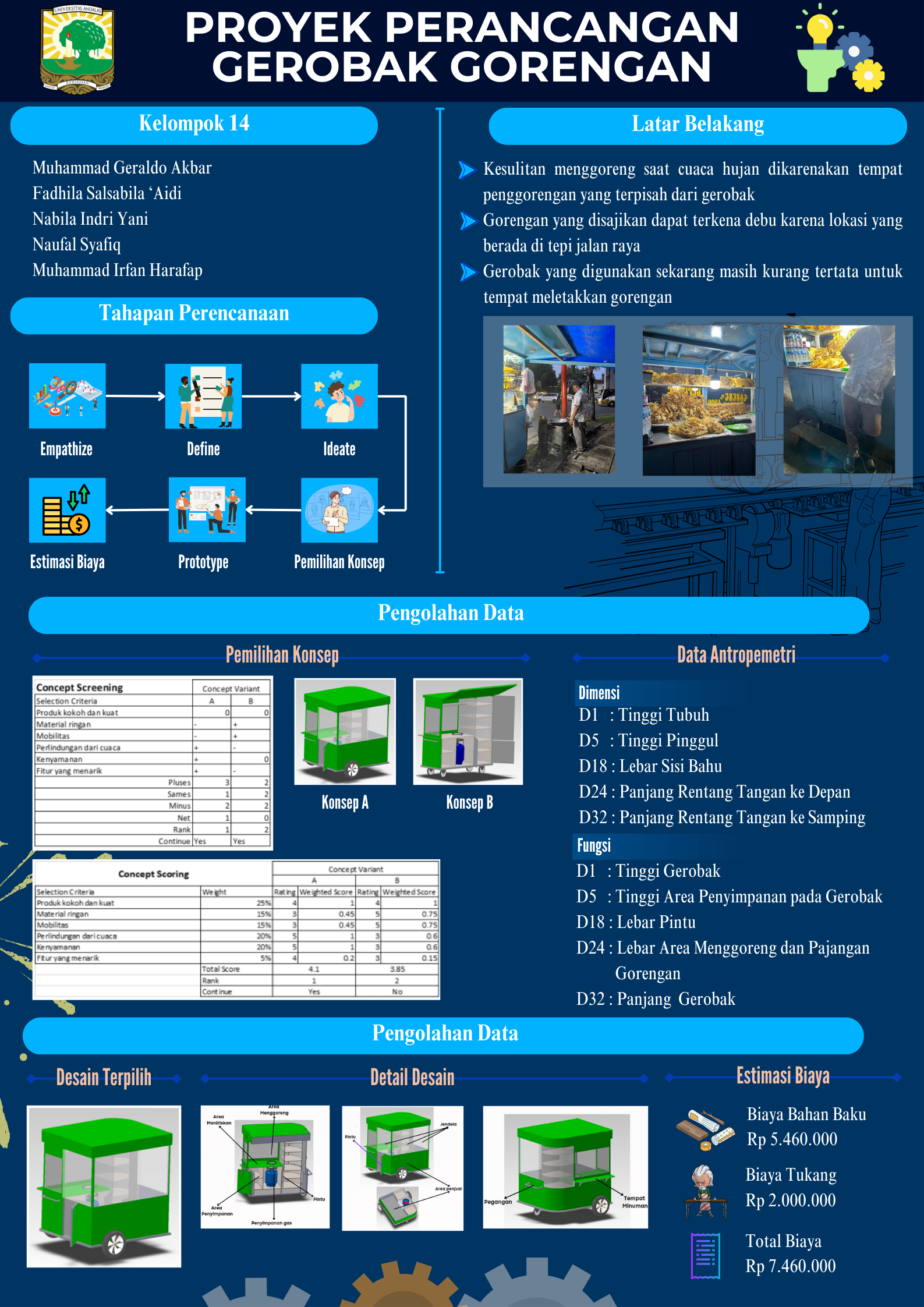
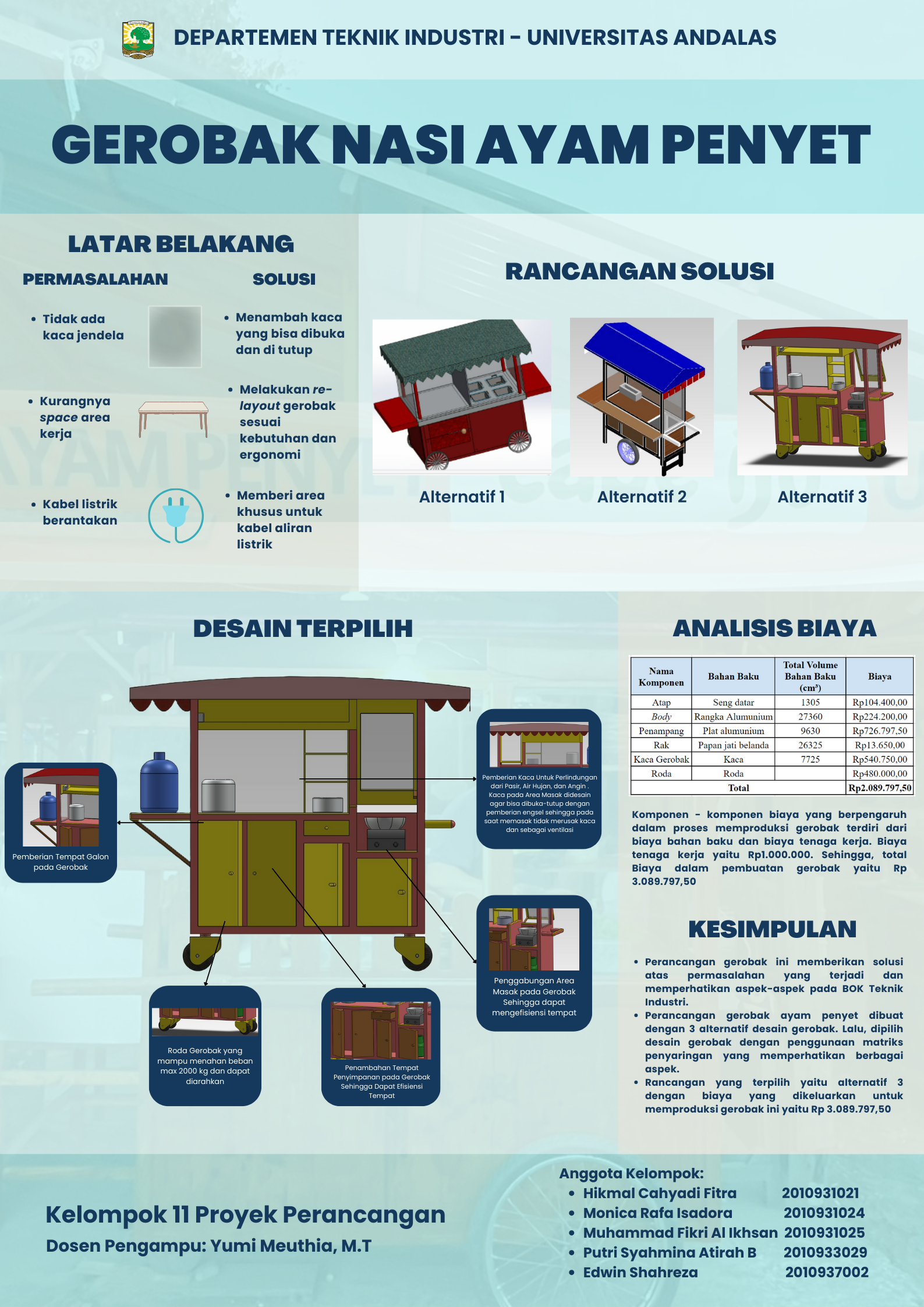

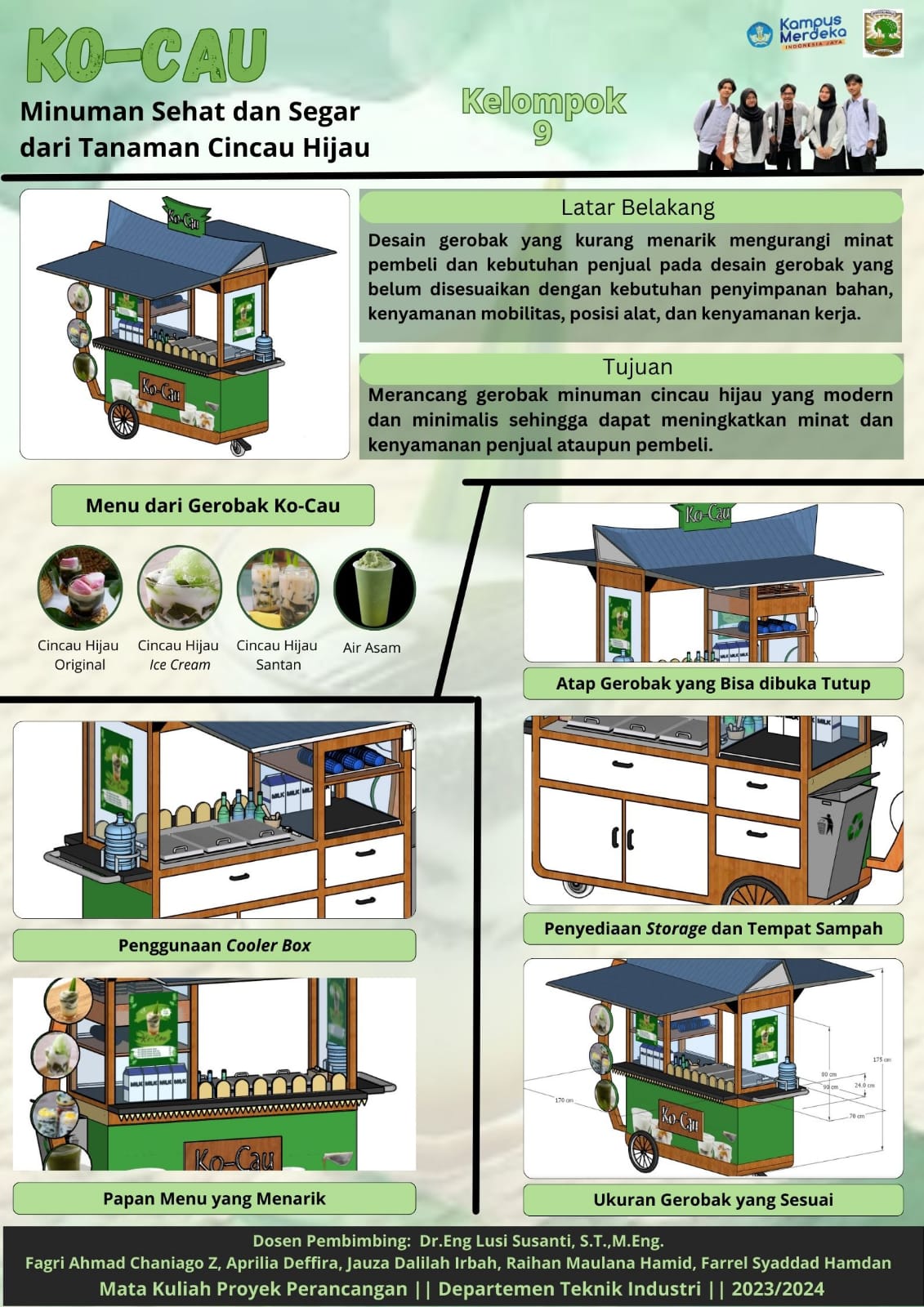
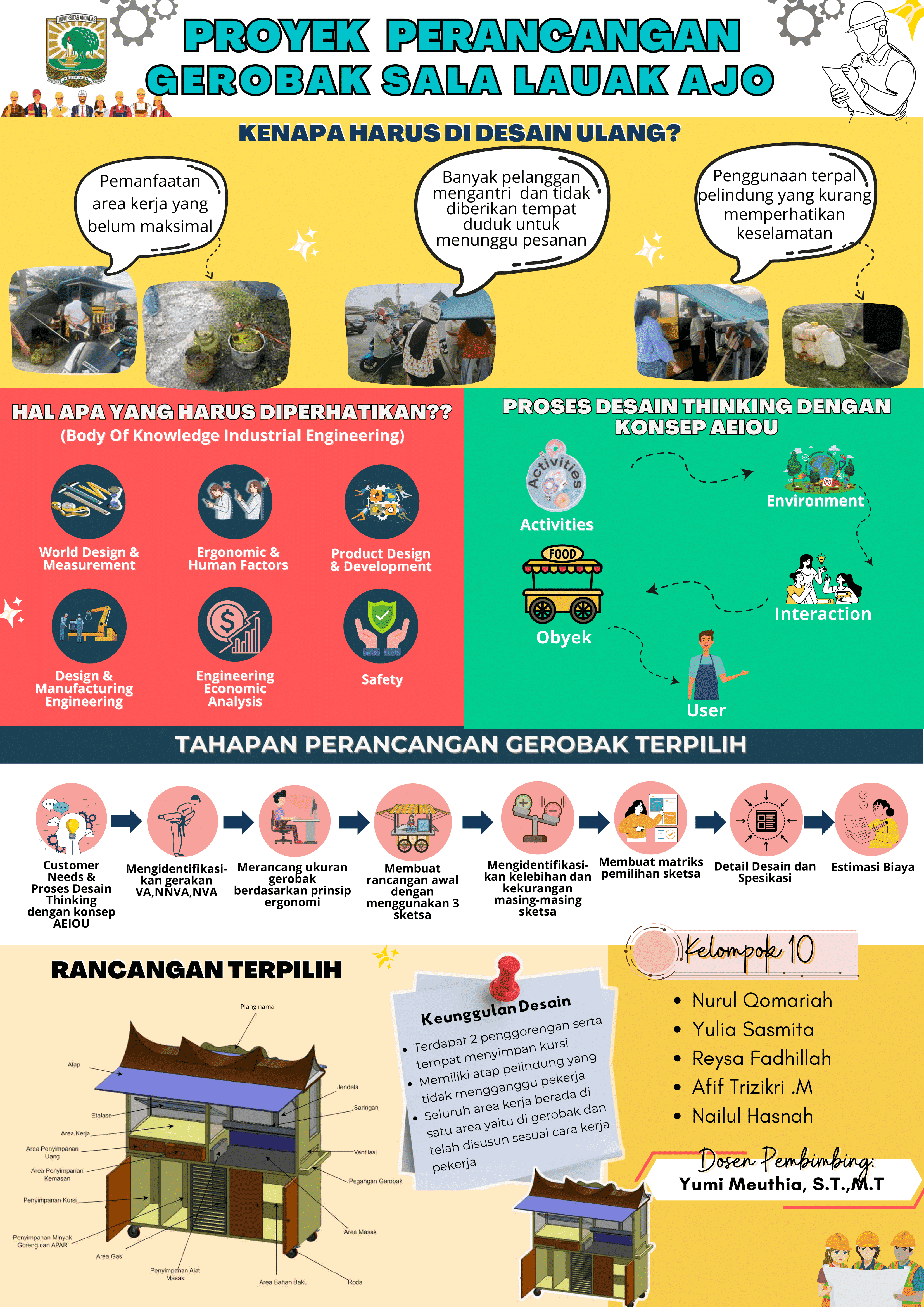
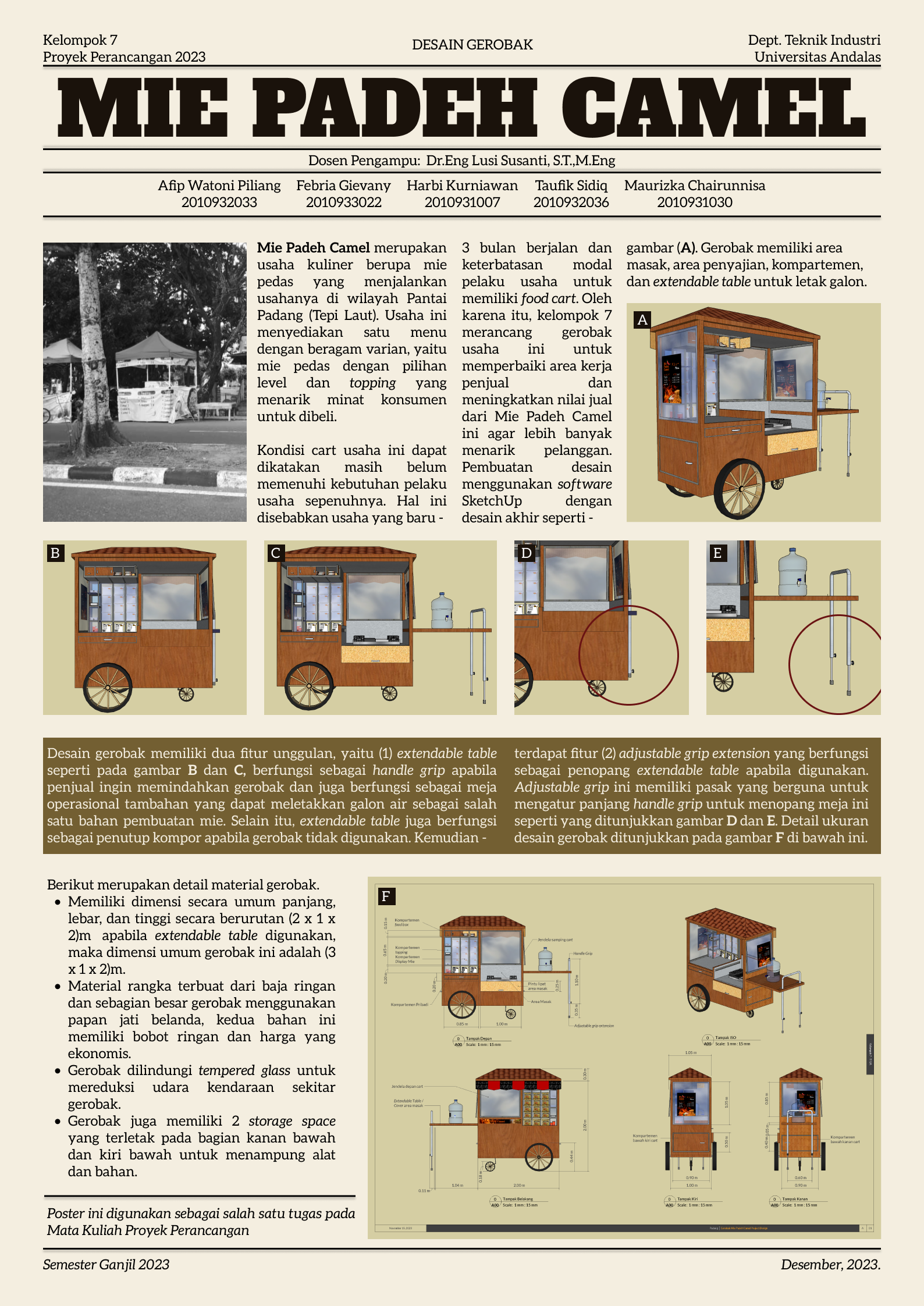
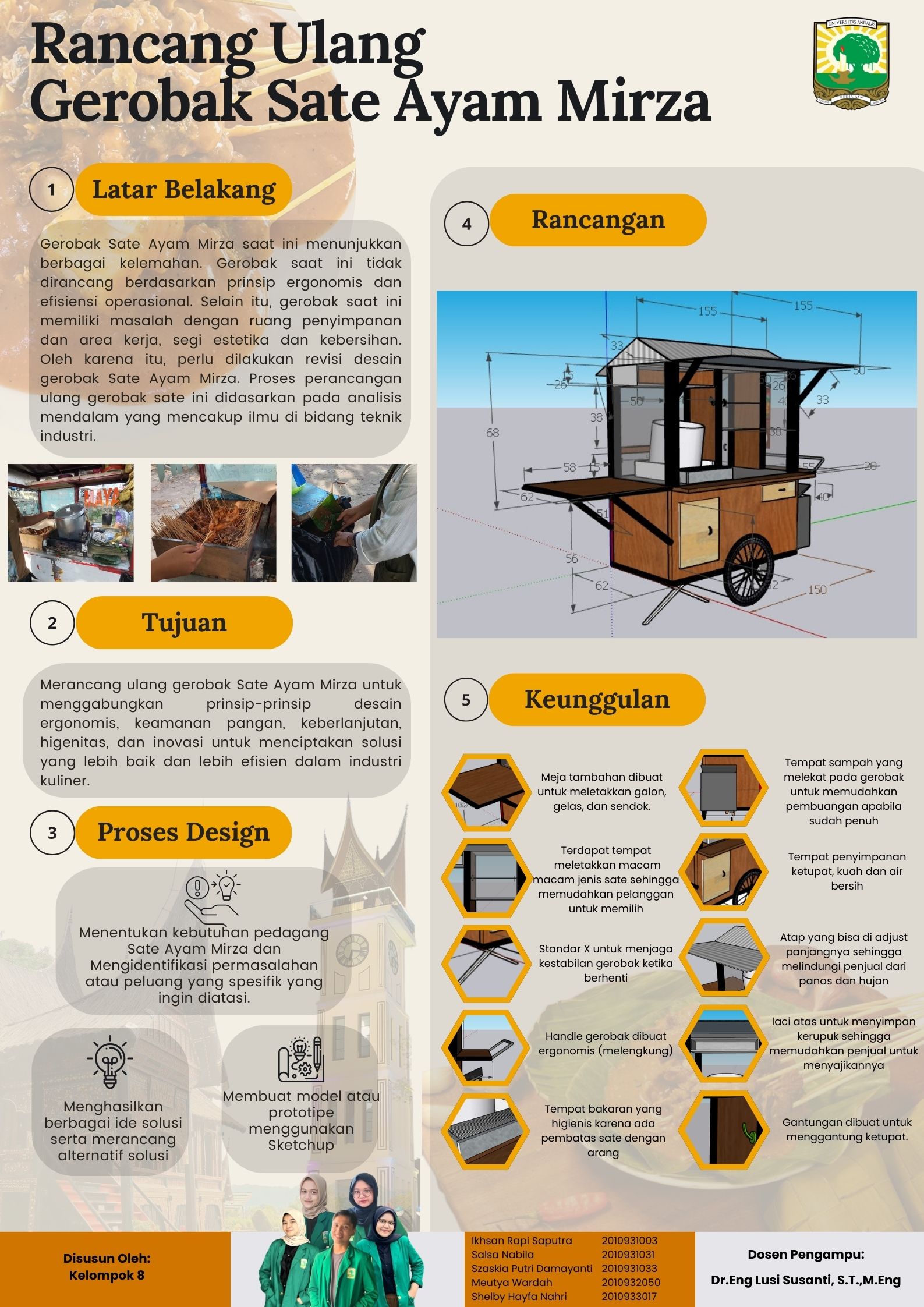
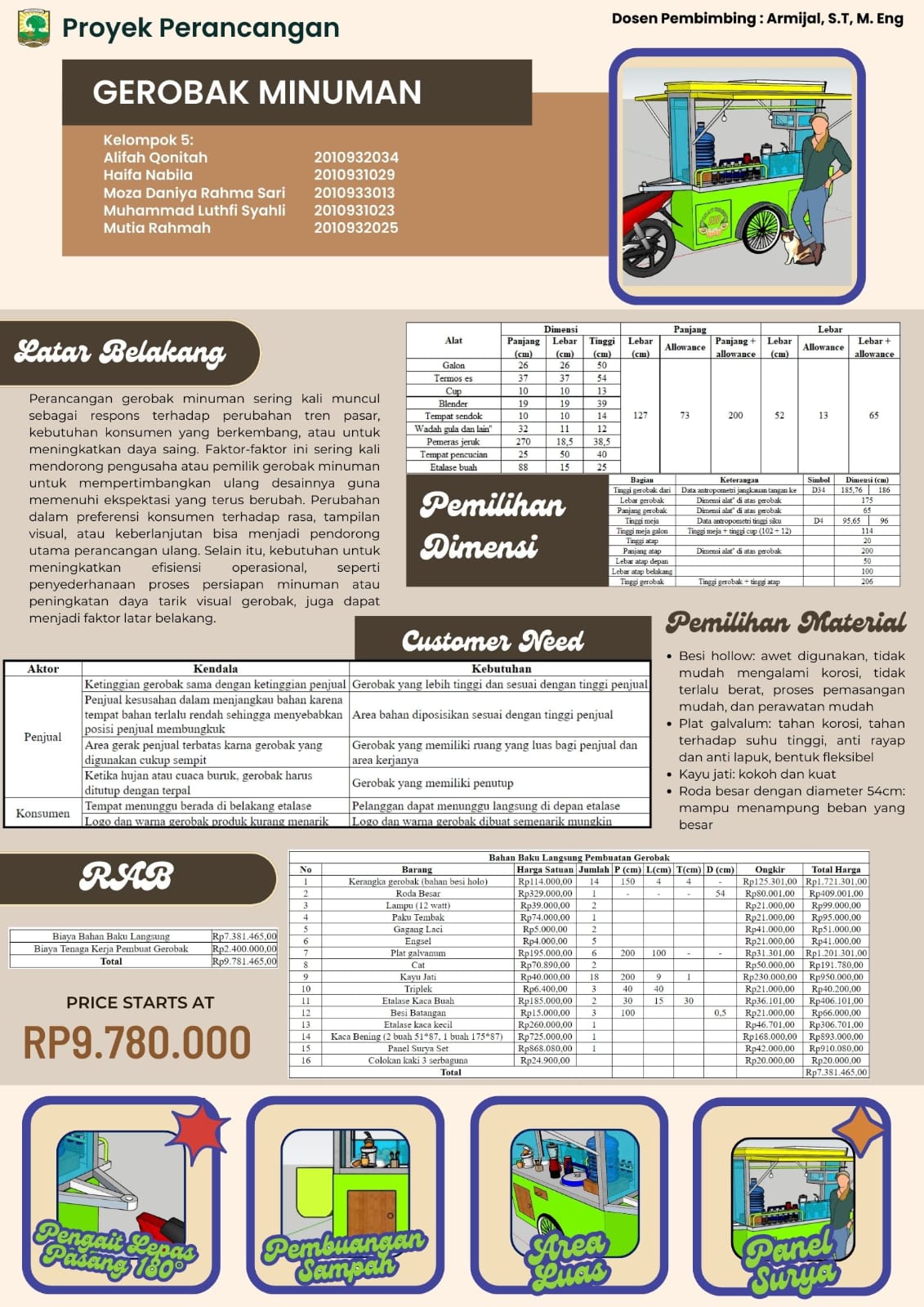
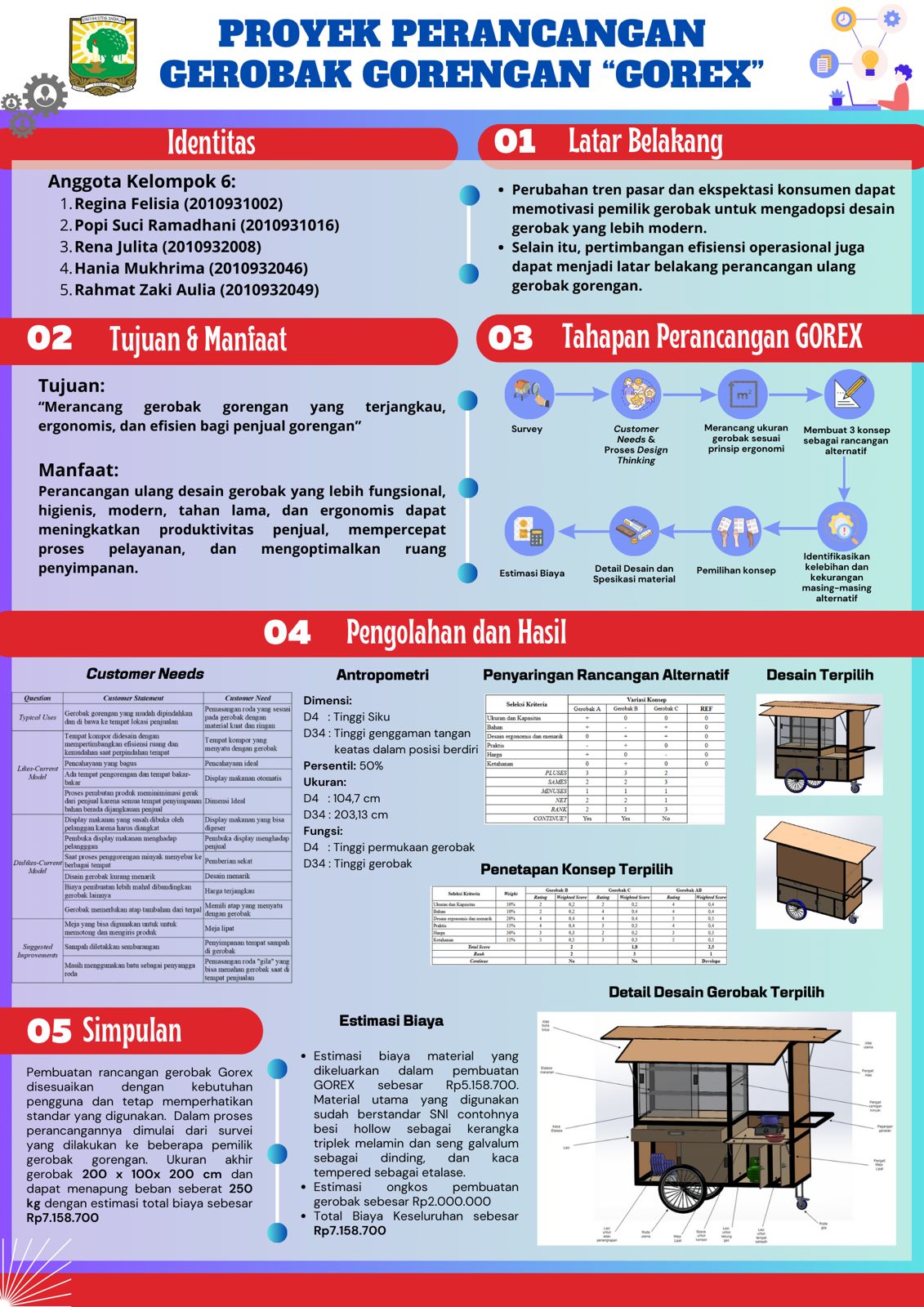
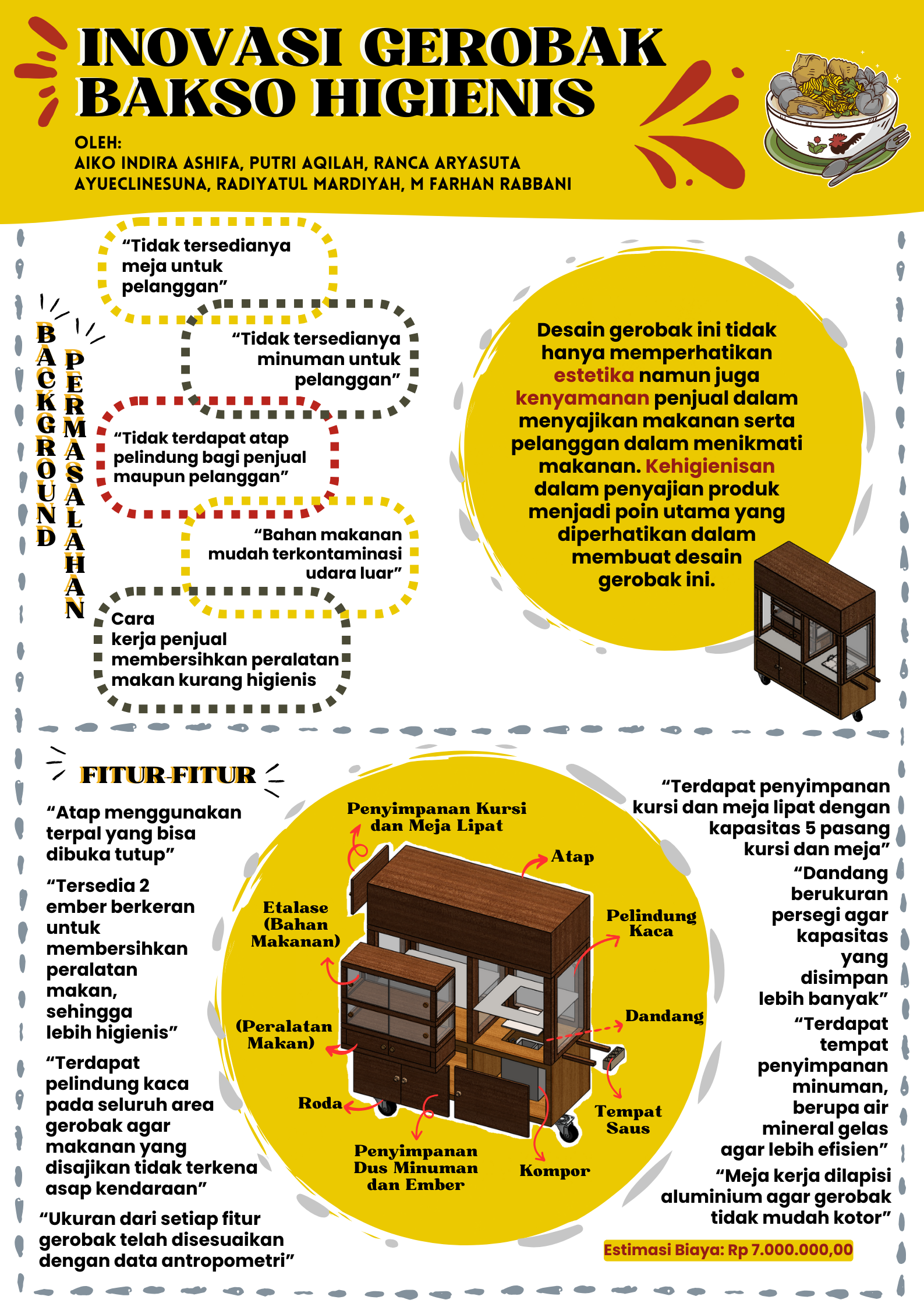
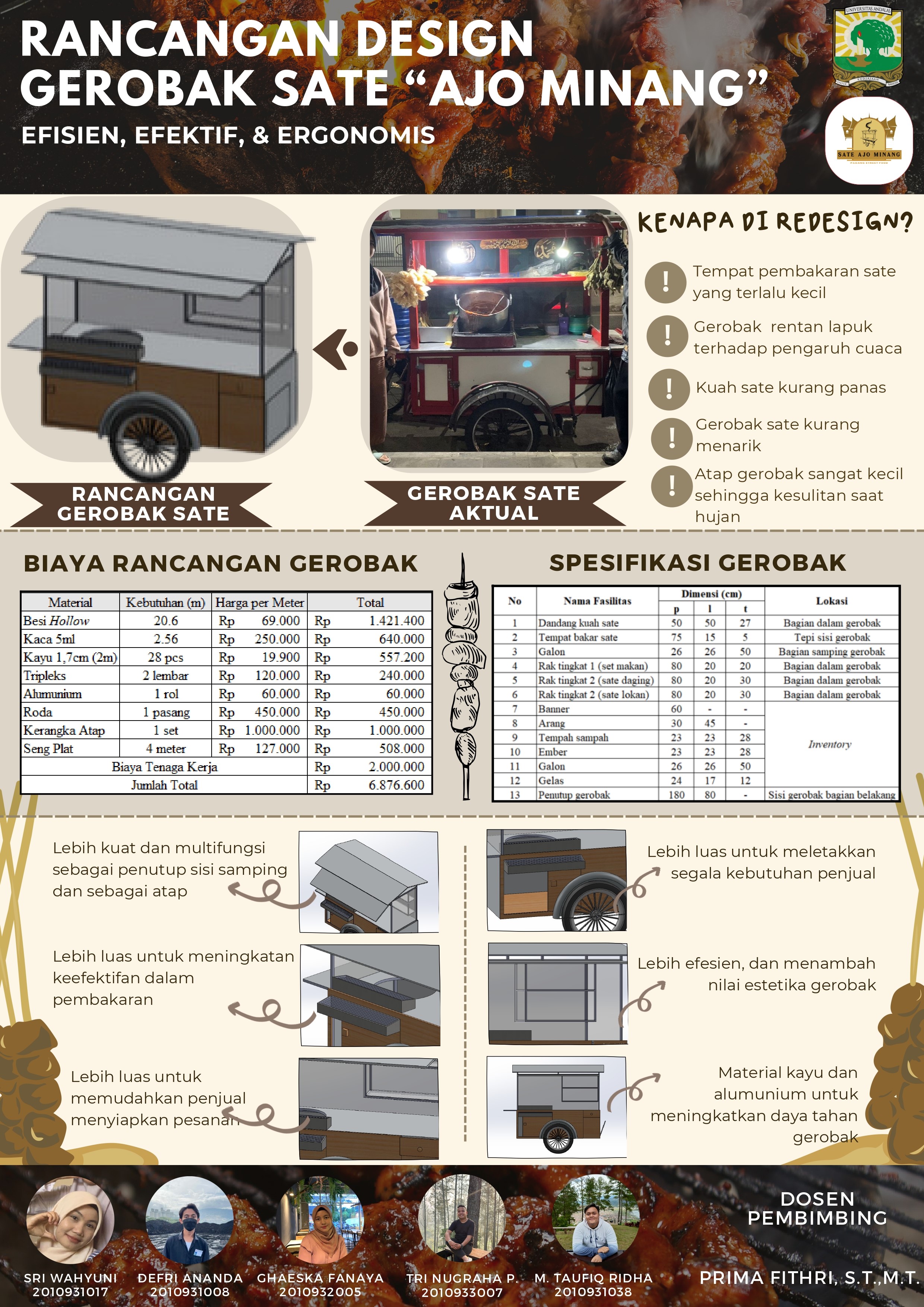
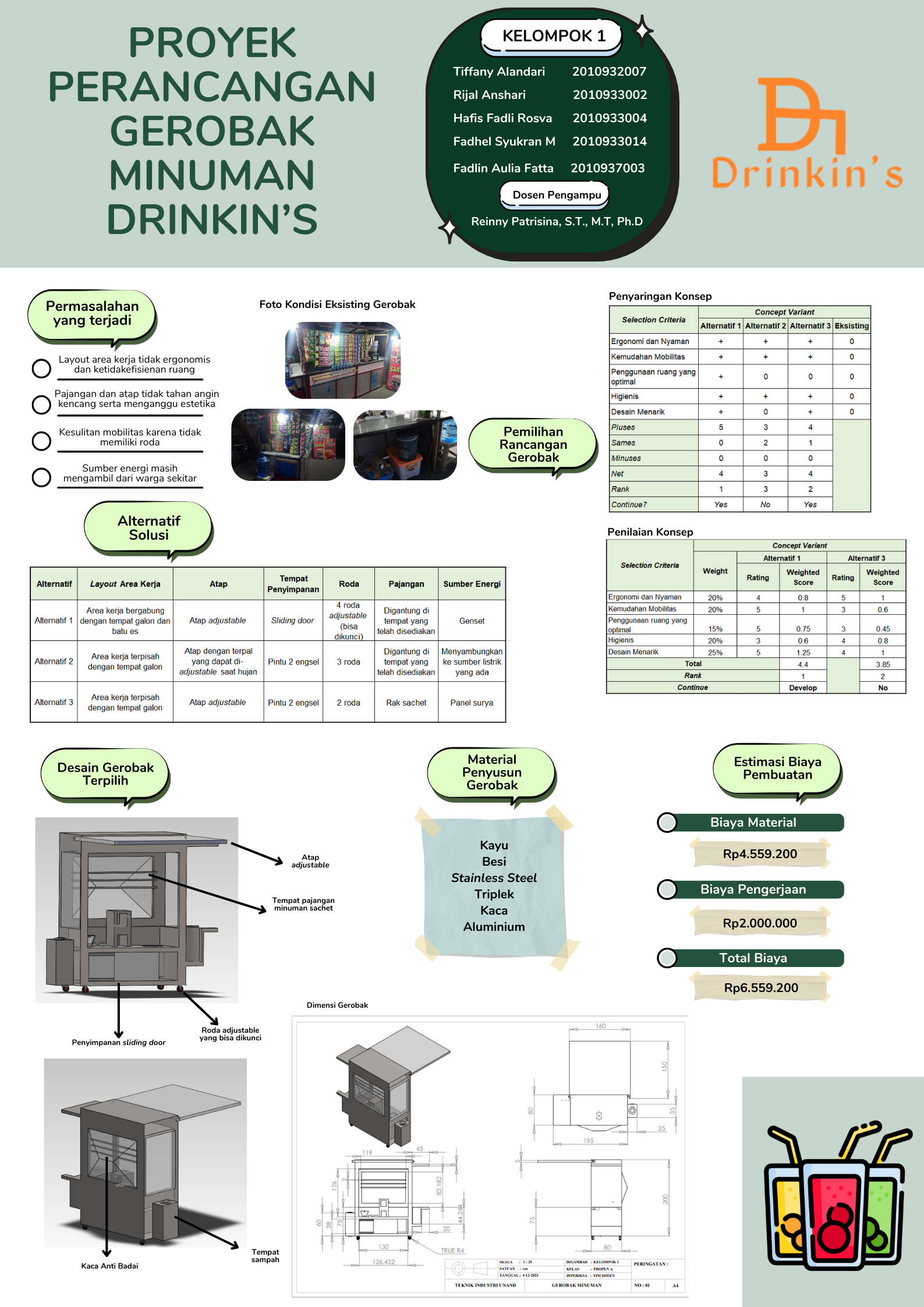
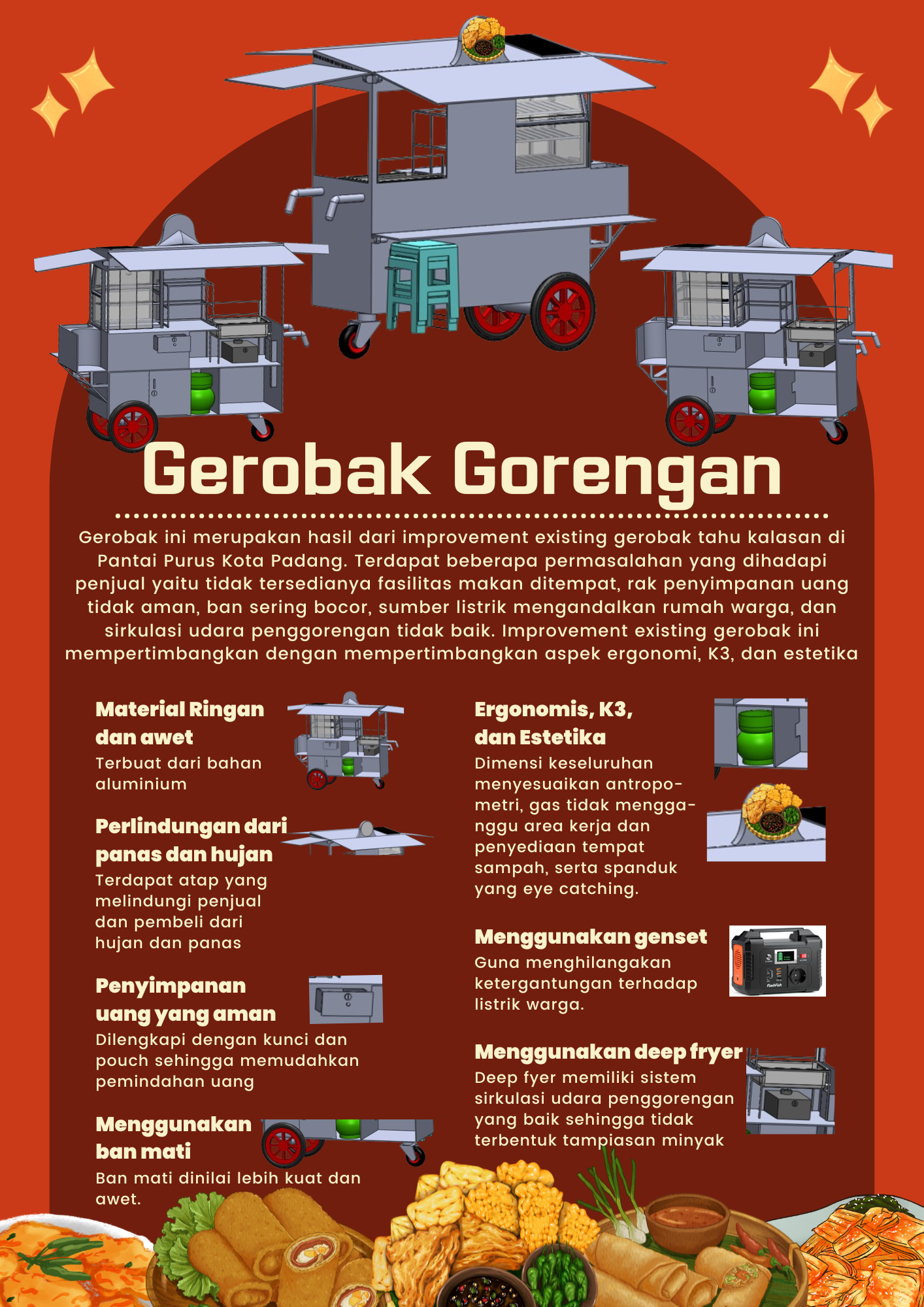
Update: Januari 2024
Sebagai bagian dari program studi keteknikan (engineering) sesuai standar kompetensi keteknikan internasional, mahasiswa senior S1 Teknik Industri mengkulminasikan (culminating) pengalaman pendidikan nya dengan mata kuliah Proyek Perancangan (Senior Design Projects). Mata Kuliah Proyek Perancangan membekali mahasiswa untuk melakukan praktik keteknikan berdasarkan pengetahuan dan keterampilan yang telah diperoleh dari aktivitas perkuliahan sebelumnya dengan memperhatikan standar-standar keteknikan dan multiple design constraints dalam menyelesaikan permasalahan kompleks di industri. Mata kuliah ini merupakan capstone design project yang mengintegrasikan berbagai IE BoK dengan pendekatan sistem. Mahasiswa bekerja dalam suatu tim mahasiswa yang menghasilkan solusi yang inovatif dan kreatif terhadap suatu permasalahan nyata yang kompleks pada klien baik industri ataupun masyarakat. Tim mahasiswa bekerja berdasarkan tahapan pengerjaan suatu proyek perancangan keteknikan (engineering design project), melakukan evaluasi dan mengkomunikasikan hasil proyeknya kepada klien terkait. Untuk informasi lebih lanjut, silahkan hubungi Dr. Eng. Desto Jumeno, Ph.D (Ketua Program Studi S1 Teknik Industri).

|
FAKTA PROYEK PERANCANGAN TA. 2024-2025
20 20 97 7 Proyek (projects) Mitra (clients) Mahasiswa (students) Dosen (faculty) |
| TEMA PROYEK PERANCANGAN |
|
- Peningkatan Kinerja Industri (Barang dan Jasa) dengan Pendekatan Metode Kuantitatif dan Kualitatif - Rancang Ulang Gerobak Kuliner UMKM - Hemat Energi - Optimalisasi UMKM dengan Pendekatan Keteknikindustrian - COVID 19 dan Penanganannya |
|
DAFTAR PROYEK PERANCANGAN
| No | Judul Proyek | Mitra | Semester |
|
1 2 3 |
Perancangan Alat Pemotong Kentang Perancangan Troli Material Handling Perancangan Alat Penggorengan Keripik Singkong |
UMKM Keripik Balado, Padang Usaha Mie Kuning Putri Minang, Pdg UMKM Keripik Balado Salsabila, Pdg |
Semester Ganjil 2024-2025 |
|
1 2 3 4 5 6 7 8 9 10 11 12 13 14 15 16 17 18 19 20 21 |
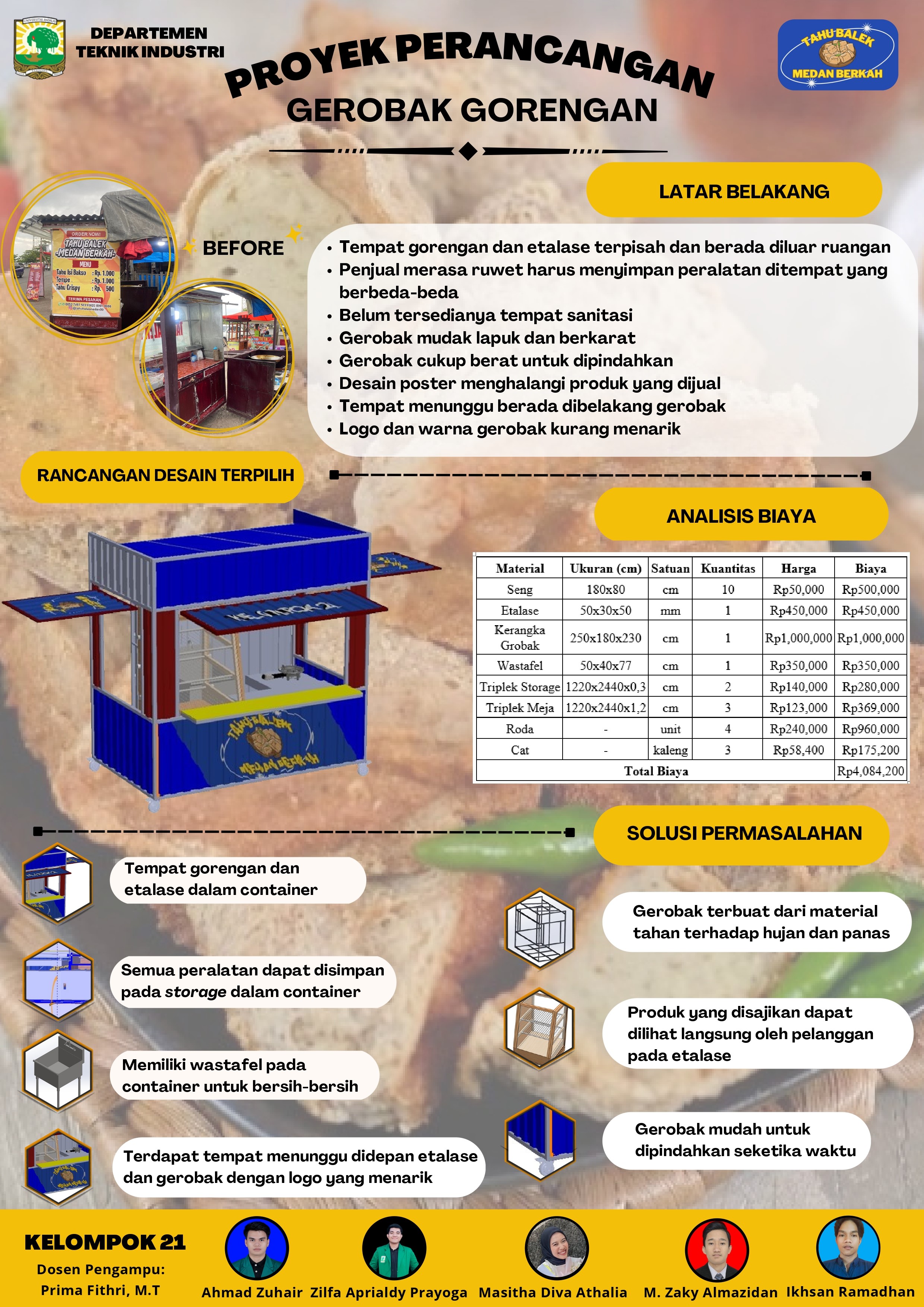
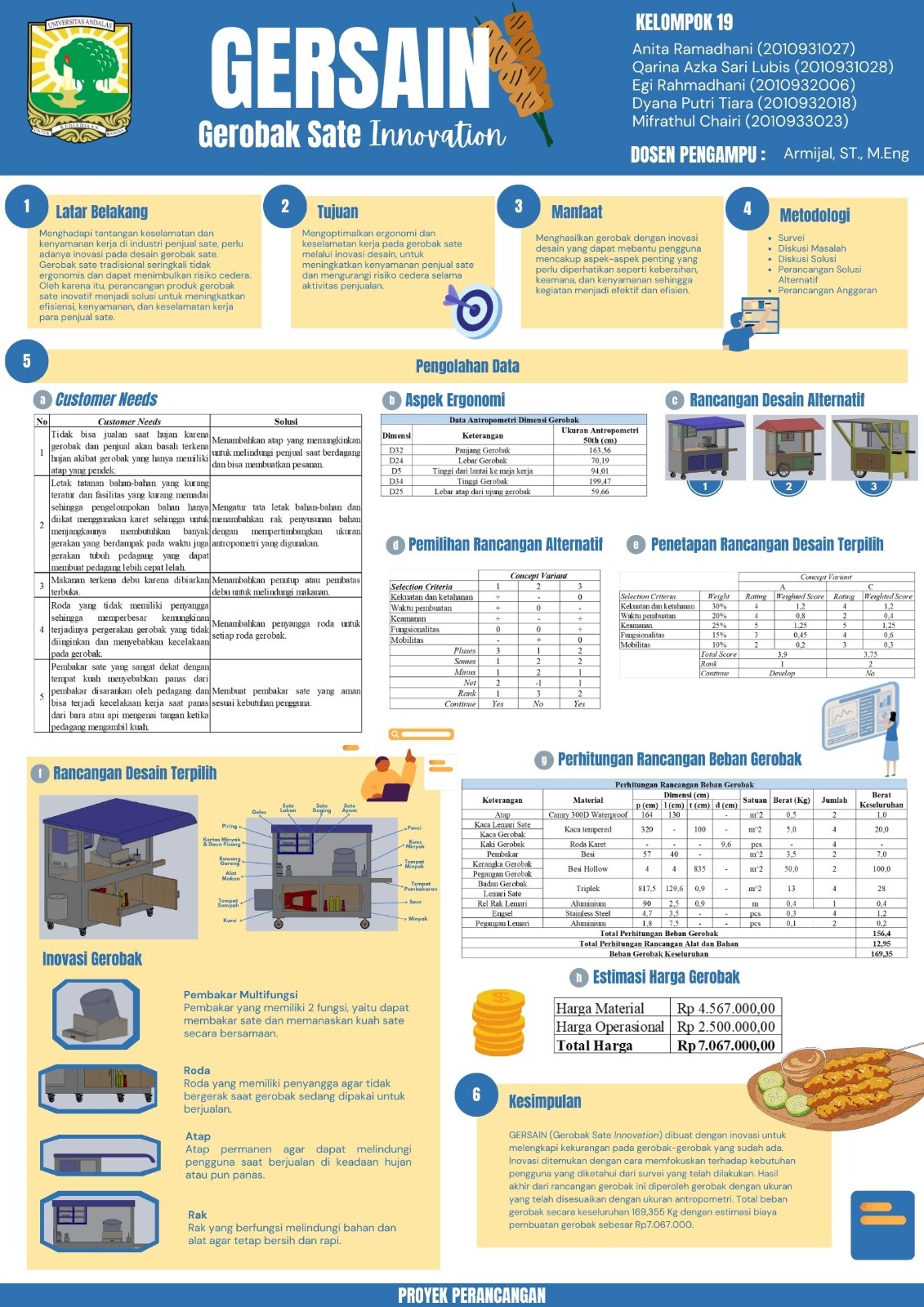
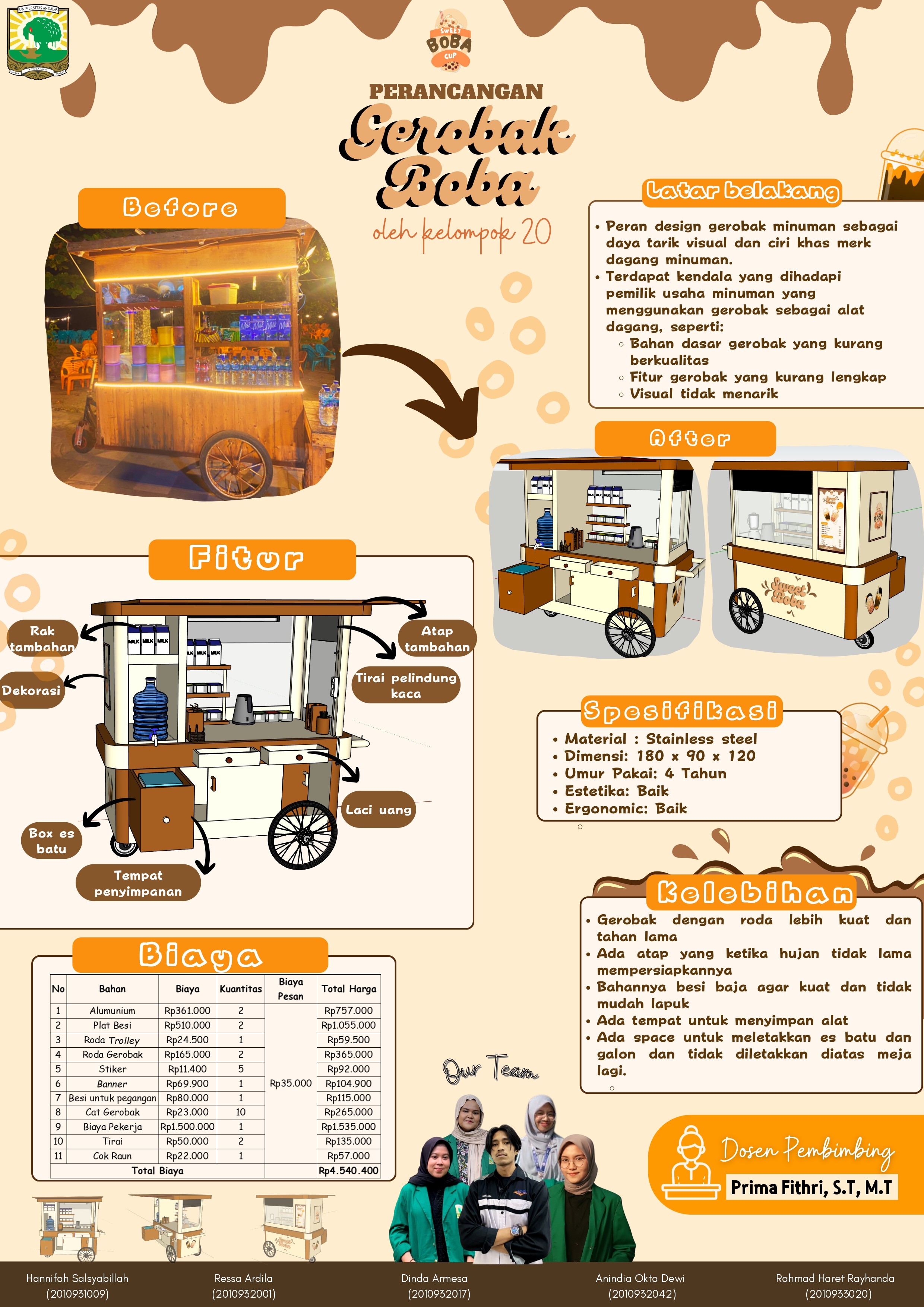
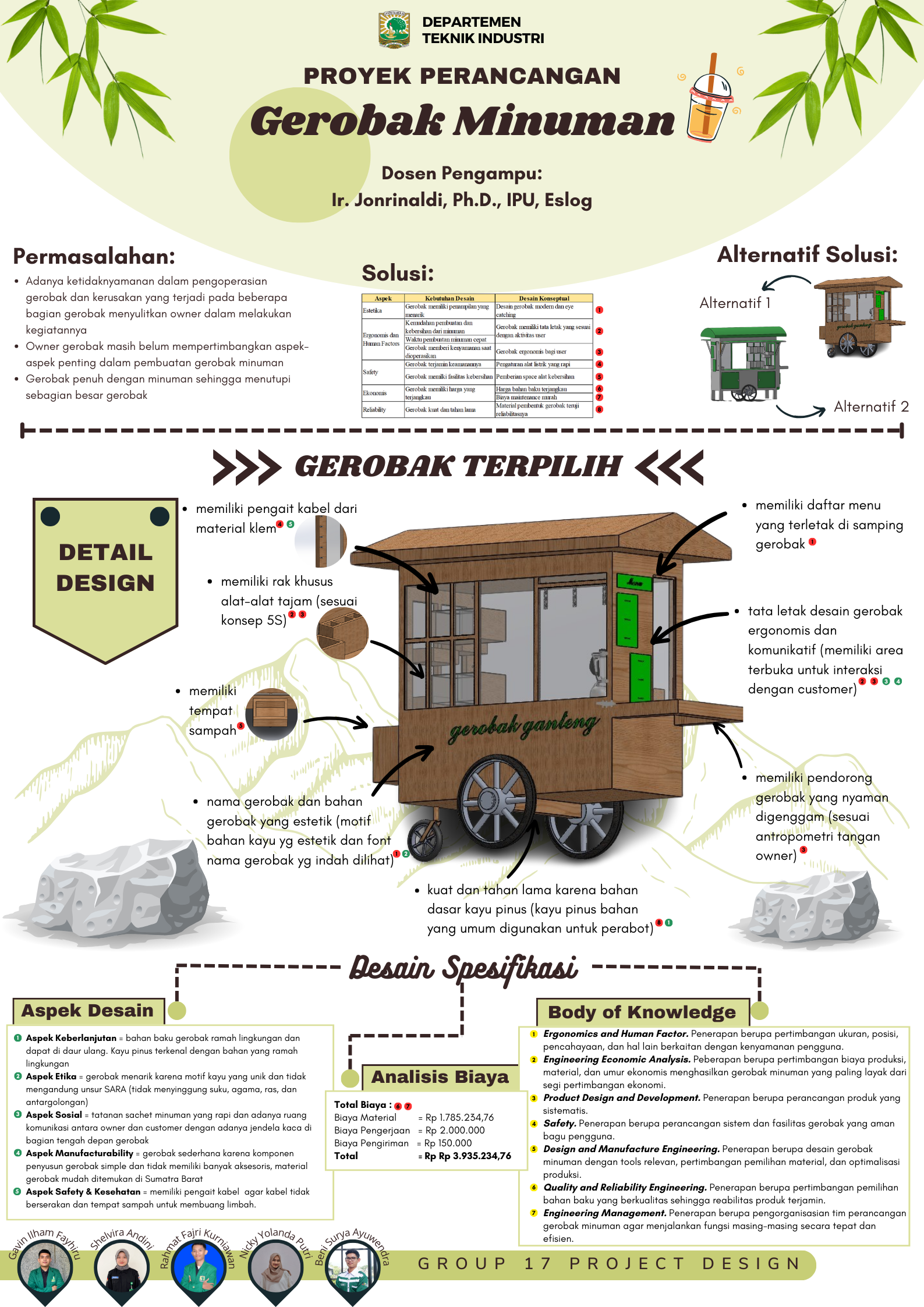
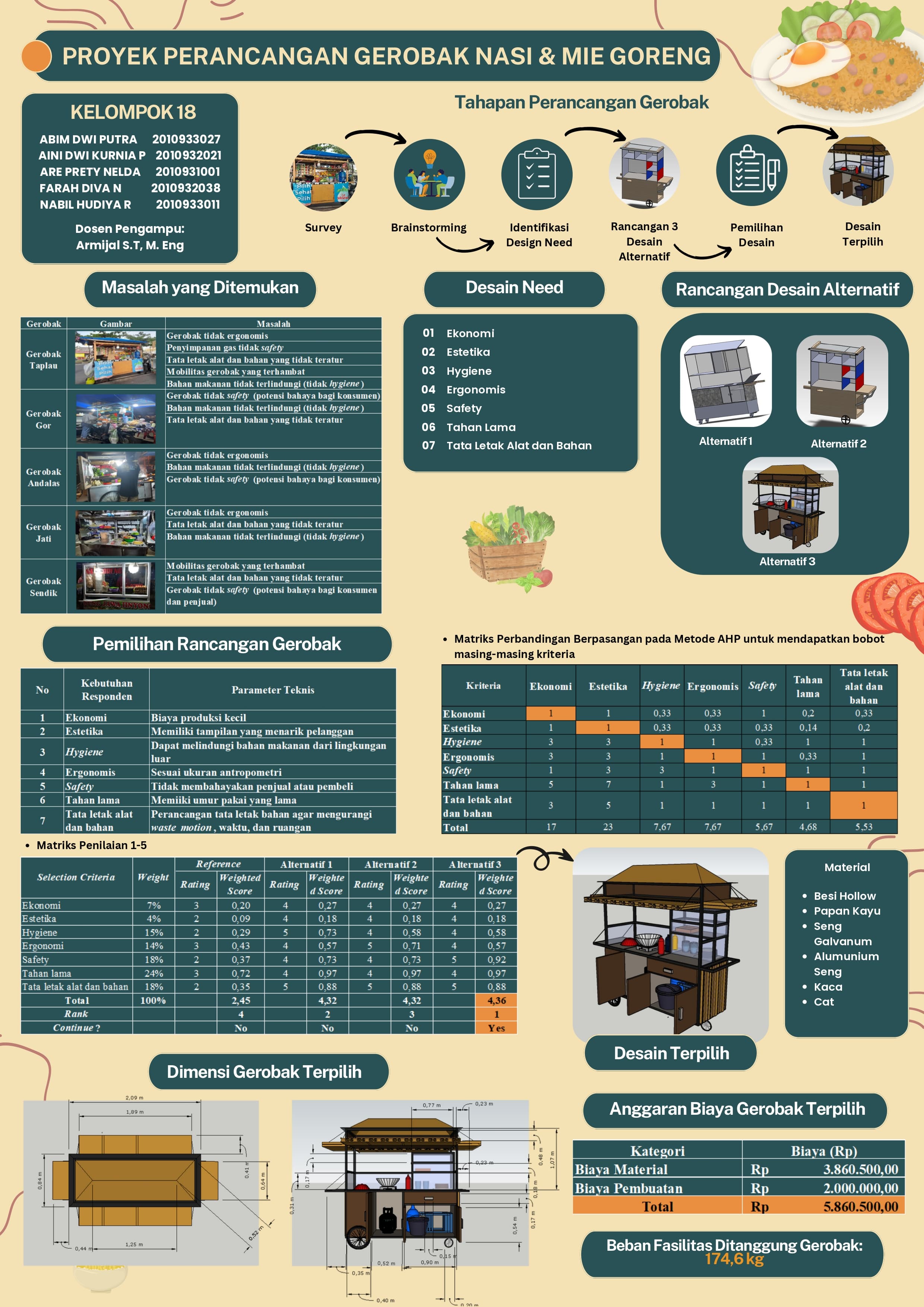
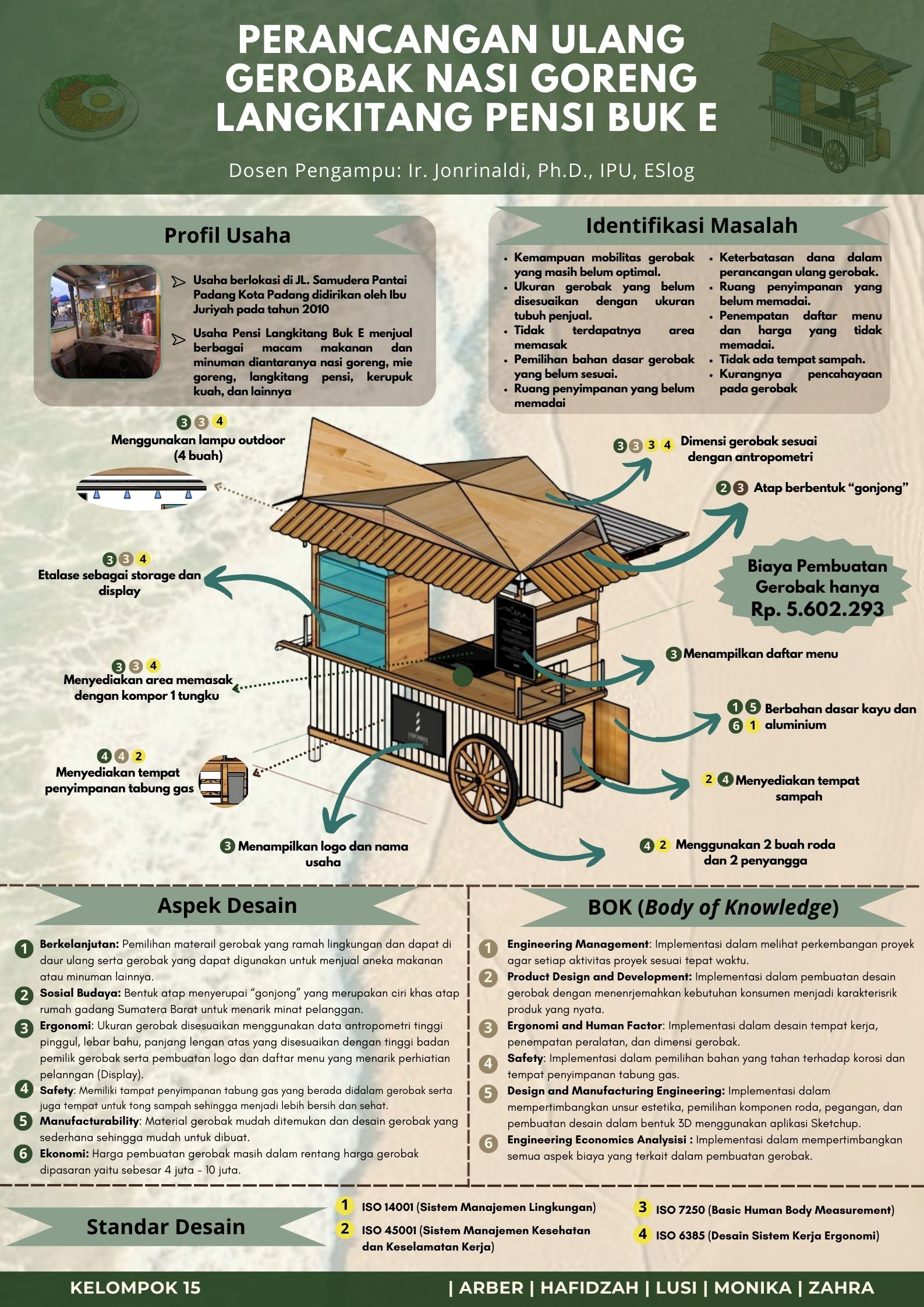
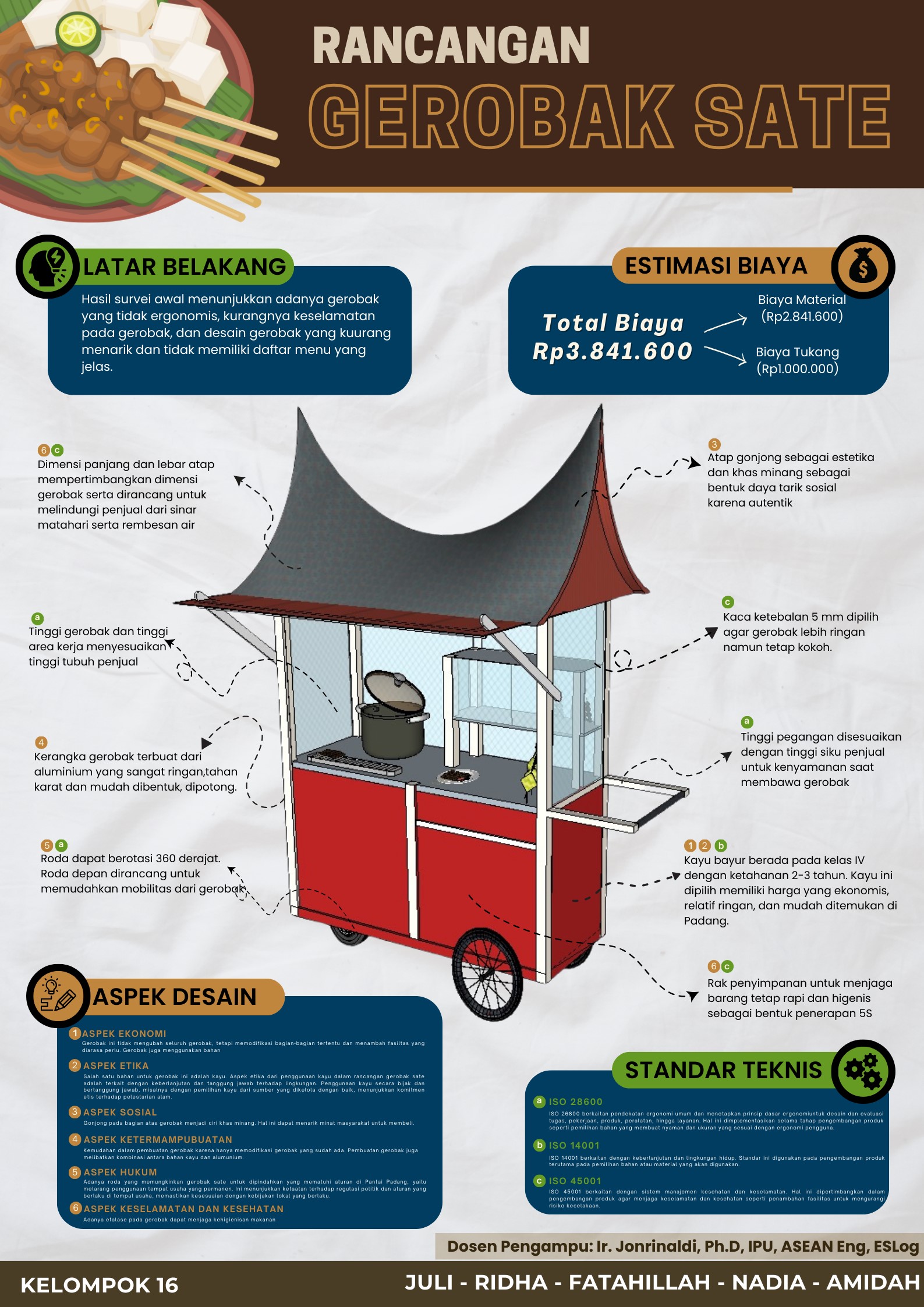
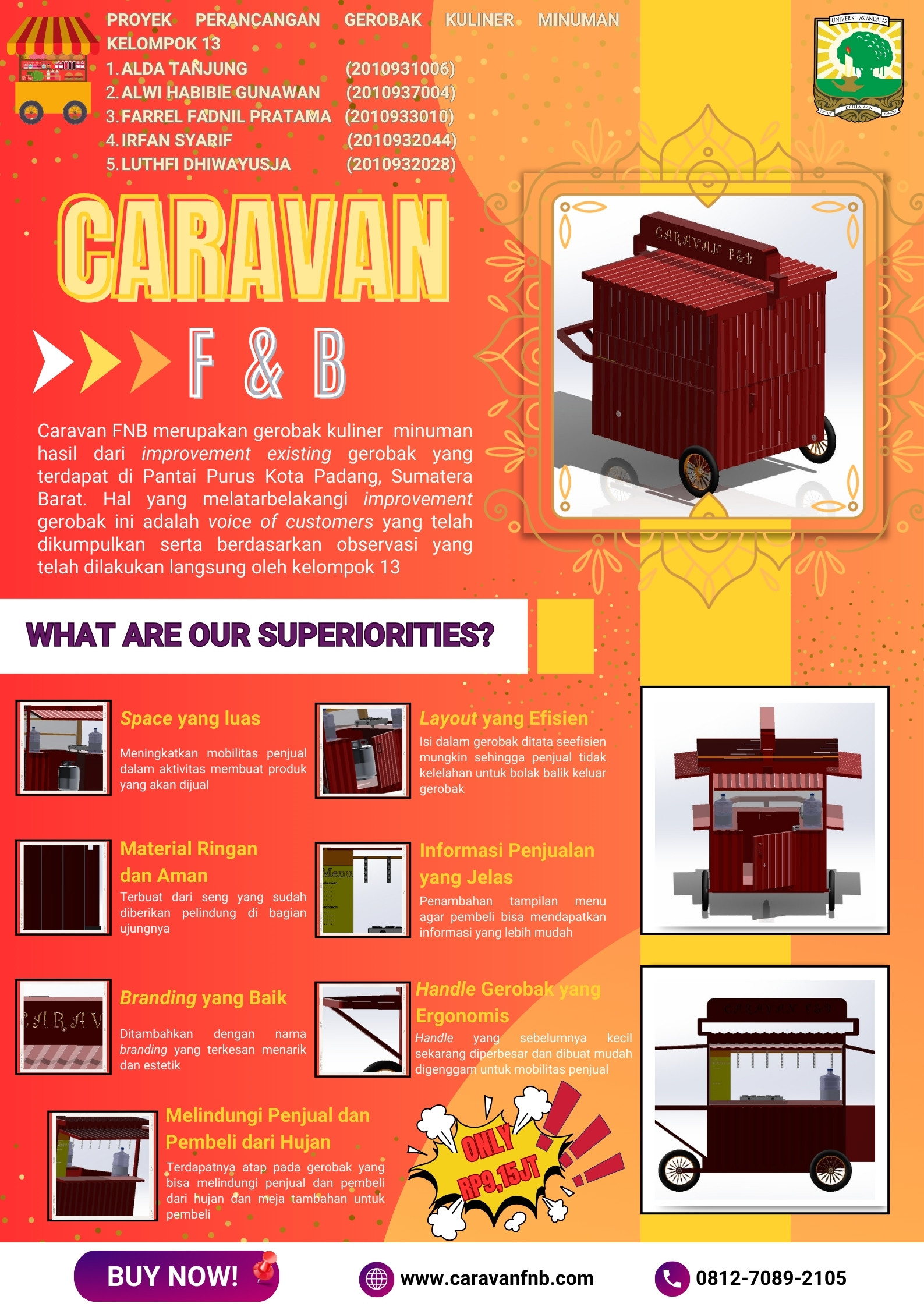
Rancang Ulang Gerobak Tahu Balek Medan Berkah Rancang Ulang Gerobak Minuman Boba Tanpa Nama Rancang Ulang Gerobak Sate Padang Rancang Ulang Gerobak Nasi & Mie Goreng --> Dokumentasi Rancang Ulang Gerobak Usaha Minuman Cimpago Beach --> Video Prototype Rancang Ulang Gerobak Kuliner Sate Yuni --> VR Prototype Rancang Ulang Gerobak Nasi Goreng Langkitang Pensi Buk E --> VR Prototype Rancang Ulang Gerobak Gorengan SeaFood Rancang Ulang Gerobak Minuman UMKM Pantai Purus Padang Rancang Ulang Gerobak Sate Ajo Rancang Ulang Gerobak Nasi Ayam Penyet Rancang Ulang Gerobak Sala Lauak Ajo Rancang Ulang Gerobak Usaha Minuman Es Cincau Hijau Bunda Rancang Ulang Gerobak Sate Ayam Mirza Rancang Ulang Gerobak Mie Padeh Camel Rancang Ulang Gerobak Gorengan Abang Sosis Rancang Ulang Gerobak Minuman Pokat Rancang Ulang Gerobak Sate Ajo Minang Rancang Ulang Gerobak Bakso Pantai Padang |
Tahu Balek Medan Berkah Tanpa Nama, Pemilik Angel Sate Padang Nasi Goreng Cimpago Beach Sate Yuni Nasi Goreng Langkitang Pensi Buk E Gorengan SeaFood Pantai Padang Gerobak Minuman UMKM Sate Ajo Ayam Penyet Udani Gorengan Sala Lauak Ajo Es Cincau Hijau Bunda Sate Ayam Mirza Mie Padeh Camel Abang Sosis Pokat Kocok GSP Sate Ajo Penjual Bakso Pantai Padang Tahu Kalasan Pantai Padang Gerobak Minuman Taplau |
Semester Ganjil 2023-2024 |
|
1 2 3 4 5 6 7 |
Spinergy Generator Penentuan Rute Pengantaran Huller Beras untuk Minimasi Biaya Operasional Perancangan Sistem Produksi di UMKM Saciok Ba Ayam Perancangan Sistem Distribusi Tahu Anita Perancangan Sistem Distribusi Produk UMKM Saiyo Bakery Padang Perancangan Sistem Distribusi CV Anabundo Perancangan Sistem Distribusi UMKM Kerupuk Kulit Arsyila |
Mahasiswa Padi Sabatang UMKM Saciok Ba Ayam Tahu Sumedang Ibu Anita UMKM Saiyo Bakery Padang CV Anabundo UMKM Kerupuk Kulit Arsyila |
Semester Genap 2022-2023 |
Update: Januari 2024
Assessment Plan and Evaluation of Student Outcomes
Industrial Enginering Undergraduate Program, Universitas Andalas
from Year 2021 to Year 2025
Student Outcomes of Industrial Enginering Undergraduate Program, Universitas Andalas
- An ability to identify, formulate and solve complex engineering problems by applying principles of engineering, science, and mathematics (ABET-1; IABEE-a,d; BKSTI-1,4; KKNI:KU-a)
- An ability to apply engineering design to produce solutions that meet specified needs with considerations of public health, safety, and welfare, as well as global, cultural, social, environmental, and economic factors (ABET-2; IABEE-b,e; BKSTI-2,5; KKNI:KU-a,c,d,e)
- An ability to communicate effectively with a range of audiences (ABET-3; IABEE-f; BKSTI-6; KKNI: KU-b,d,f,i)
- An ability to recognize ethical and professional responsibilities in engineering situations and make informed judgements, which must consider the impact of engineering solutions in global, economic, environmental, and societal contexts (ABET-4; IABEE-b,i; BKSTI-2,9; KKNI: S-a,b,d,e,f,g,h,i; KKNI: KU-c,e)
- An ability to function effectively on a team whose members together provide leadership, create a collaborative and inclusive environment, establish goals, plan tasks, and meet objectives (ABET-5; IABEE-g,h; BKSTI-7,8; KKNI: S-b,c,e,i; KKNI: KU-b,f,g,h,i)
- An ability to develop and conduct appropriate experimentation, analyze and interpret data, and use engineering judgement to draw conclusions (ABET-6; IABEE-c,e; BKSTI-3,5; KKNI:KU-e,i)
- An ability to acquire and apply new knowledge as needed, using approriate learning strategies (ABET-7; IABEE-j; BKSTI-10; KKNI: KU-d,h)
- An ability to apply basic entrepreneurship skills (KKNI: S-j)
Collecting assessment data as well as performing actions for improvement and review activities for every student outcome are conducted every year. The activity cycle is shown in Table 4.3. The cycle of activity continues previous 3 years activity for each student that has been done. In Year 5 we review the student outcomes to follow the new ABET 1-7 student outcomes.
Table 1 Cycle of activity for each student outcome over six years period
|
Activity for each Student Outcome |
Year 5 (2020) |
Year 6 (2021) |
Year 7 (2022) |
Year 8 (2023) |
Year 9 (2024) |
Year 10 (2025) |
|
1. Review of Student outcomes |
X |
X |
X |
|||
|
2. Review of Performance Indicators that define the student outcome |
X |
X |
X |
|||
|
3. Review mapping and identify where data will be collected |
X |
X |
X |
|||
|
4. Develop and review assessment methods used to assess performance indicators |
X |
X |
X |
X |
X |
|
|
5. Collect data for assessment |
X |
X |
X |
X |
X |
|
|
6. Evaluate assessment results including process |
X |
X |
X |
X |
X |
|
|
7. Report finding |
X |
X |
X |
X |
X |
|
|
8. Suggest actions for improvement and take them when necessary |
X |
X |
X |
X |
X |
The next annual assessment plan for every student outcome are detailed in the following tables for the new students outcomes of the Industrial Enginering Pogram of Universitas Andalas following the ABET new SOs 1-7 which is started in Year 6 of the cycle of evaluation of the student outcomes. The assessment plan of the Industrial Engineering Program for five assessment cycles (five years) is from even semester of academic year 2020-21 until odd semester of academic year 2025-26.
Capaian Pembelajaran/Student Outcome #1: An ability to identify, formulate and solve complex engineering problems by applying principles of engineering, science, and mathematics
|
Performance Indicators (PIs) for this outcome |
Courses were PI exists (use a simple list) |
Specific Method of Assessment (rubric, etc.) |
Courses Assessed (where the PI and related data are collected) |
Cycle of When the PI Assessed (how often) |
Year and Semester when Data were collected |
Performance Target for PI |
| 1. Applies knowledge of mathematics, natural sciences, and information technology to acquire understanding of engineering principles |
TIN61101, TIN61102, TIN61103, TIN61105, TIN62107, TIN62108, TIN62109, TIN61111, TIN61114, TIN62118, TIN62121 |
rubric of quiz and exam | TIN61101, TIN62108, TIN62109 | One academic year | Even Semester 2023-24, 2024-2025, Odd Semester 2023-24, 2024-2025, 2025-26 | At least 60% of students score equal to or more than 65 points (out of 100) or 3 (out of 4) |
| Exit Surveys | Online surveys | |||||
|
2. Identifies engineering problem which consist of decision maker, objective, performance measure and alternative course of action |
TIN61104, TIN61106, TIN62109, TIN62110, TIN61112, TIN61113, TIN61115, TIN62136, TIN62120, TIN62121, TIN62122, TIN62123, TIN61125, TIN62119, TIN61127, TIN61128, TEK60103, TIN61129, TIN61130, TIN62131, TIN62124, TIN62133, TIN62135, TIN60138, TIN60139, TIN60140 |
rubric of quiz, assignment, and exam |
TIN61130 TIN62135 |
One academic year |
Even Semester 2021-22, 2022-23, 2023-24, 2024-2025, Odd Semester 2021-22, 2022-23, 2023-24, 2024-2025, 2025-26 |
At least 60% of students score equal to or more than 65 points (out of 100) or 3 (out of 4) |
|
Exit Surveys |
Online surveys |
|||||
|
3. Formulates the problem using an appropriate model |
TIN61104, TIN62109, TIN62110, TIN62120, TIN62121, TIN62123, TIN61125, TIN61127, TIN61130, TIN62131, TIN62133 |
rubric of quiz, assignment, and exam |
TIN61125 TIN62120 |
One academic year |
Even Semester 2021-22, 2022-23, 2023-24, 2024-2025, Odd Semester 2021-22, 2022-23, 2023-24, 2024-2025, 2025-26 |
At least 60% of students score equal to or more than 65 points (out of 100) or 3 (out of 4) |
|
Exit Surveys |
Online surveys |
|||||
|
4. Solves the problem using an appropriate method or technique |
TIN61101, TIN61102, TIN61103, TIN61104, TIN62108, TIN62107, TIN62109, TIN62110 TIN61111, TIN61112, TIN61113, TIN61114, TIN61115, TIN62118, TIN62120, TIN62121, TIN62122, TIN62123, TIN61125, TIN62119, TIN61127, TIN61128, TEK60103, TIN61129, TIN61130, TIN62131, TIN62124, TIN62133, TIN60138, TIN60140 |
rubric of quiz, assignment, and exam |
TIN62120, TIN61130 TIN62110 |
One academic year |
Even Semester 2021-22, 2022-23, 2023-24, 2024-2025, Odd Semester 2021-22, 2022-23, 2023-24, 2024-2025, 2025-26 |
At least 60% of students score equal to or more than 65 points (out of 100) or 3 (out of 4) |
|
Exit Surveys |
Online surveys |
Capaian Pembelajaran/Student Outcome #2: An ability to apply engineering design to produce solutions that meet specified needs with considerations of public health, safety, and welfare, as well as global, cultural, social, environmental, and economic factors
|
Performance Indicators (PIs) for this outcome |
Courses were PI exists (use a simple list) |
Specific Method of Assessment (rubric, etc.) |
Courses Assessed (where the PI and related data are collected) |
Cycle of When the PI Assessed (how often) |
Year and Semester when Data were collected |
Performance Target for PI |
|
1. Identifies the specified design needs |
TIN61105, TIN62109, TIN61112, TIN61113, TIN61115, TIN62123, TIN62119, TIN61127, TIN61116, TIN61126, TIN61128, TIN61117, TIN61129, TIN62131, TIN62124, TIN62132, TIN62133, TIN62135, TIN60138, TIN60140 |
rubric of quiz, assignment and exam |
TIN62131, TIN62135, TIN60138 |
One academic year |
Even Semester 2021-22, 2022-23, 2023-24, 2024-2025, Odd Semester 2021-22, 2022-23, 2023-24, 2024-2025, 2025-26 |
At least 60% of students score equal to or more than 65 points (out of 100) or 3 (out of 4) |
|
Exit Surveys |
Online surveys |
|||||
|
2. Develops alternative solutions by applying engineering design principles |
TIN61112, TIN61113, TIN61115, TIN62136, TIN62123, TIN62119, TIN61127, TIN61116, TIN61128, TIN62131, TIN62132, TIN62133, TIN62135, TIN60138 |
rubric of quiz, assignment and exam |
TIN62131, TIN62135, TIN60138 |
One academic year |
Even Semester 2021-22, 2022-23, 2023-24, 2024-2025, Odd Semester 2021-22, 2022-23, 2023-24, 2024-2025, 2025-26 |
At least 60% of students score equal to or more than 65 points (out of 100) or 3 (out of 4) |
|
Exit Surveys |
Online surveys |
|||||
|
3. Evaluates and selects the appropriate design solution using appropriate methods, skills and modern engineering tools |
TIN61106, TIN61112, TIN61113, TIN61114, TIN61115, TIN62136, TIN62121, TIN62122, TIN62123, TIN62119, TIN61127, TIN61116, TIN61126, TIN61128, TIN61117, TEK60103, TIN61129, TIN62131, TIN62124, TIN62132, TIN62133, TIN62135, TIN60138, TIN60140 |
rubric of quiz, assignment and exam |
TIN62131, TIN62135, TIN60138 |
One academic year |
Even Semester 2021-22, 2022-23, 2023-24, 2024-2025, Odd Semester 2021-22, 2022-23, 2023-24, 2024-2025, 2025-26 |
At least 60% of students score equal to or more than 65 points (out of 100) or 3 (out of 4) |
|
Exit Surveys |
Online surveys |
Capaian Pembelajaran/Student Outcome #3: An ability to communicate effectively with a range of audiences
|
Performance Indicators (PIs) for this outcome |
Courses were PI exists (use a simple list) |
Specific Method of Assessment (rubric, etc.) |
Courses Assessed (where the PI and related data are collected) |
Cycle of When the PI Assessed (how often) |
Year and Semester when Data were collected |
Performance Target for PI |
|
1. Presents ideas orally in front of audiences |
MWU60104, TEK60101, TIN62123, TIN61116, TIN61126, TIN61128, TIN60134, TIN62131, TIN60137, TIN62133, AND60102, TIN62135, TIN60138, TIN60139, TIN60140 |
rubric of oral presentation |
TIN60139, TIN60140 |
One academic year |
Even Semester 2021-22, 2022-23, 2023-24, 2024-2025, Odd Semester 2021-22, 2022-23, 2023-24, 2024-2025, 2025-26 |
At least 75% of students score equal to or more than 65 points (out of 100) or 3 (out of 4) |
|
Exit Surveys |
Online surveys |
|||||
|
2. Writes a report according to the academic writing standard |
TIN60134, TIN60137, AND60101, TIN60138, TIN60139, TIN60140 |
rubric of proposal report |
TIN60134, TIN60140 |
One academic year |
Even Semester 2021-22, 2022-23, 2023-24, 2024-2025, Odd Semester 2021-22, 2022-23, 2023-24, 2024-2025, 2025-26 |
At least 60% of students score equal to or more than 65 points (out of 100) or 3 (out of 4) |
|
Exit Surveys |
Online surveys |
|||||
|
3. Responds to audience feedbacks |
TIN62123, TIN61116, TIN61126, TIN61128, TIN60134, TIN62131, TIN60137, TIN62133, AND60102, TIN62135, TIN60138, TIN60139, TIN60140 |
rubric of oral presentation |
TIN60139, TIN60140 |
One academic year |
Even Semester 2021-22, 2022-23, 2023-24, 2024-2025, Odd Semester 2021-22, 2022-23, 2023-24, 2024-2025, 2025-26 |
At least 80% of students score equal to or more than 65 points (out of 100) or 3 (out of 4) |
|
Exit Surveys |
Online surveys |
Capaian Pembelajaran/Student Outcome #4: An ability to recognize ethical and professional responsibilities in engineering situations and make informed judgements, which must consider the impact of engineering solutions in global, economic, environmental, and societal contexts
|
Performance Indicators (PIs) for this outcome |
Courses were PI exists (use a simple list) |
Specific Method of Assessment (rubric, etc.) |
Courses Assessed (where the PI and related data are collected) |
Cycle of When the PI Assessed (how often) |
Year and Semester when Data were collected |
Performance Target for PI |
|
1. Lists and explains the code of ethics of engineers and laws related to engineering situation |
MWU60101, TIN61104, TIN61106, MWU60102, MWU60103, TEK60102, TIN61126 |
rubric of quiz, assignment |
TEK60102, TIN61126, TIN61104 |
One academic year |
Even Semester 2021-22, 2022-23, 2023-24, 2024-2025, Odd Semester 2021-22, 2022-23, 2023-24, 2024-2025, 2025-26 |
At least 75% of students score equal to or more than 65 points (out of 100) or 3 (out of 4) |
|
Exit Surveys |
Online surveys |
|||||
|
2. Writes an engineering ethic problem report from a case study |
TIN61104, TIN61106, TEK60102, TIN61126 |
rubric of assignment |
TEK60102 TIN61126 |
One academic year |
Even Semester 2021-22, 2022-23, 2023-24, 2024-2025, Odd Semester 2021-22, 2022-23, 2023-24, 2024-2025, 2025-26 |
At least 70% of students score equal to or more than 65 points (out of 100) or 3 (out of 4) |
|
Exit Surveys |
Online surveys |
|||||
|
3. Acts according to professional and ethical responsibility |
MWU60101, TIN61104, TIN61106, MWU60102, MWU60103, TIN61115, TEK60102, TIN62122, TIN62119, TIN61127, TIN61116, TIN61126, TIN61117, TEK60103, TIN61129, TIN61130, TIN62131, TIN62124, TIN60137, TIN62132, AND60102, TIN62135, AND60101, TIN60138, TIN60139, TIN60140 |
rubric of intership program activity |
TIN60137, TIN60138 |
One academic year |
Even Semester 2021-22, 2022-23, 2023-24, 2024-2025, Odd Semester 2021-22, 2022-23, 2023-24, 2024-2025, 2025-26 |
At least 80% of students score equal to or more than 65 points (out of 100) or 3 (out of 4) |
|
Exit Surveys |
Online surveys |
Capaian Pembelajaran/Student Outcome #5: An ability to function effectively on a team whose members together provide leadership, create a collaborative and inclusive environment, establish goals, plan tasks, and meet objectives
|
Performance Indicators (PIs) for this outcome |
Courses were PI exists (use a simple list) |
Specific Method of Assessment (rubric, etc.) |
Courses Assessed (where the PI and related data are collected) |
Cycle of When the PI Assessed (how often) |
Year and Semester when Data were collected |
Performance Target for PI |
|
1. Participates collaboratively in delegating and assuming responsibilities for tasks based on objectives, plan and schedule arranged |
TEK60101, TEK60103, TIN62120, TIN62123, TIN61125, TIN62119, TIN61127, TIN61116, TIN62131, TIN60137, AND60102, TIN62135, AND60101, TIN60138, TIN60139, TIN60140 |
rubric of lab activity and assignment |
TIN62135, TIN60138, AND60101 |
One academic year |
Even Semester 2021-22, 2022-23, 2023-24, 2024-2025, Odd Semester 2021-22, 2022-23, 2023-24, 2024-2025, 2025-26 |
At least 70% of students score equal to or more than 65 points (out of 100) or 3 (out of 4) |
|
Exit Surveys |
Online surveys |
|||||
|
2. Accommodates inputs from other teammates, shares information with them and actively listens to them. |
TEK60101, TEK60103, TIN62123, TIN61127, TIN61116, TIN62131, AND60102, TIN62135, AND60101, TIN60138 |
rubric of lab activity and assignment |
TIN62135, TIN60138, AND60101 |
One academic year |
Even Semester 2021-22, 2022-23, 2023-24, 2024-2025, Odd Semester 2021-22, 2022-23, 2023-24, 2024-2025, 2025-26 |
At least 70% of students score equal to or more than 65 points (out of 100) or 3 (out of 4) |
|
Exit Surveys |
Online surveys |
|||||
|
3. Completes assigned tasks to meet objectives within the agreed dates according to schedule and accomplish of tasks |
TEK60101, TEK60103, TIN62120, TIN62123, TIN61125, TIN62119, TIN61127, TIN61116, TIN62131, TIN60137, AND60102, TIN62135, AND60101, TIN60138, TIN60139, TIN60140 |
rubric of lab activity and assignment |
TIN62135, TIN60138, AND60101 |
One academic year |
Even Semester 2021-22, 2022-23, 2023-24, 2024-2025, Odd Semester 2021-22, 2022-23, 2023-24, 2024-2025, 2025-26 |
At least 70% of students score equal to or more than 65 points (out of 100) or 3 (out of 4) |
|
Exit Surveys |
Online surveys |
|||||
|
4. Responds by adapting to different backgrounds, roles and priorities of the team members. |
TEK60101, TEK60103, TIN62123, TIN61127, TIN61116, TIN62131, AND60102, TIN62135, AND60101, TIN60138 |
rubric of lab activity and assignment |
TIN62135, TIN60138, AND60101 |
One academic year |
Even Semester 2021-22, 2022-23, 2023-24, 2024-2025, Odd Semester 2021-22, 2022-23, 2023-24, 2024-2025, 2025-26 |
At least 70% of students score equal to or more than 65 points (out of 100) or 3 (out of 4) |
|
Exit Surveys |
Online surveys |
Capaian Pembelajaran/Student Outcome #6: An ability to develop and conduct appropriate experimentation, analyze and interpret data, and use engineering judgement to draw conclusions
|
Performance Indicators (PIs) for this outcome |
Courses were PI exists (use a simple list) |
Specific Method of Assessment (rubric, etc.) |
Courses Assessed (where the PI and related data are collected) |
Cycle of When the PI Assessed (how often) |
Year and Semester when Data were collected |
Performance Target for PI |
|
1. Determines responses to be measured and measurement techniques |
TIN61112, TIN61114, TIN61115, TIN61128, TIN62121, TIN62119, TIN61127, TIN61128, TIN61129, TIN62133, TIN60138 |
rubric of lab activity, assignment, exam |
TIN61128, TIN62133 |
One academic year |
Even Semester 2021-22, 2022-23, 2023-24, 2024-2025, Odd Semester 2021-22, 2022-23, 2023-24, 2024-2025, 2025-26 |
At least 60% of students score equal to or more than 65 points (out of 100) or 3 (out of 4) |
|
Exit Surveys |
Online surveys |
|||||
|
2. Identifies variables and their levels expected to have significant effect on the responses |
TIN61112, TIN61114, TIN61115, TIN61128, TIN62121, TIN62119, TIN61127, TIN61128, TIN61129, TIN62133, TIN60138 |
rubric of lab activity, assignment, exam |
TIN61128, TIN62133 |
One academic year |
Even Semester 2021-22, 2022-23, 2023-24, 2024-2025, Odd Semester 2021-22, 2022-23, 2023-24, 2024-2025, 2025-26 |
At least 60% of students score equal to or more than 65 points (out of 100) or 3 (out of 4) |
|
Exit Surveys |
Online surveys |
|||||
|
3. Analyses experimentation results and draws conclusions using engineering judgement |
TIN61112, TIN61114, TIN61115, TIN61128, TIN62121, TIN62119, TIN61127, TIN61128, TIN61129, TIN62133, TIN60138 |
rubric of lab activity, assignment, exam |
TIN61128, TIN62133 |
One academic year |
Even Semester 2021-22, 2022-23, 2023-24, 2024-2025, Odd Semester 2021-22, 2022-23, 2023-24, 2024-2025, 2025-26 |
At least 60% of students score equal to or more than 65 points (out of 100) or 3 (out of 4) |
|
Exit Surveys |
Online surveys |
Capaian Pembelajaran/Student Outcome #7: An ability to acquire and apply new knowledge as needed, using approriate learning strategies
|
Performance Indicators (PIs) for this outcome |
Courses were PI exists (use a simple list) |
Specific Method of Assessment (rubric, etc.) |
Courses Assessed (where the PI and related data are collected) |
Cycle of When the PI Assessed (how often) |
Year and Semester when Data were collected |
Performance Target for PI |
|
1. Searches and accesses new information and knowledge from various medias |
TIN61104, TEK60102, TIN62120 TIN62119, TIN61127, TIN61116 TIN61126, TIN61117 TIN61129, TIN61130, TIN60134, TIN62124, AND60102, TIN62135, TIN60138, TIN60139, TIN60140 |
rubric of final project process evaluation by supervisors |
TIN60140 |
One academic year |
Even Semester 2021-22, 2022-23, 2023-24, 2024-2025, Odd Semester 2021-22, 2022-23, 2023-24, 2024-2025, 2025-26 |
At least 70% of students score equal to or more than 65 points (out of 100) or 3 (out of 4) |
|
Exit Surveys |
Online surveys |
|||||
|
2. Presents the acquired new knowledge and information clearly |
TIN61104, TEK60102, TIN62119, TIN61127, TIN61126, TIN61117, TIN61130, TIN60134, TIN62124, AND60102, TIN62135, TIN60138, TIN60139, TIN60140 |
rubric of final project process evaluation by supervisors |
TIN60140 |
One academic year |
Even Semester 2021-22, 2022-23, 2023-24, 2024-2025, Odd Semester 2021-22, 2022-23, 2023-24, 2024-2025, 2025-26 |
At least 70% of students score equal to or more than 65 points (out of 100) or 3 (out of 4) |
|
Exit Surveys |
Online surveys |
|||||
|
3. Applies the acquired new knowledge and information accordingly |
TEK60102, TIN62120, TIN62119, TIN61127, TIN61129, TIN61130, AND60102, TIN62135, TIN60138, TIN60140 |
rubric of final project process evaluation by supervisors |
TIN60140 |
One academic year |
Even Semester 2021-22, 2022-23, 2023-24, 2024-2025, Odd Semester 2021-22, 2022-23, 2023-24, 2024-2025, 2025-26 |
At least 70% of students score equal to or more than 65 points (out of 100) or 3 (out of 4) |
|
Exit Surveys |
Online surveys |
Capaian Pembelajaran/Student Outcome #8: An ability to apply basic entrepreneurship skills
|
Performance Indicators (PIs) for this outcome |
Courses were PI exists (use a simple list) |
Specific Method of Assessment (rubric, etc.) |
Courses Assessed (where the PI and related data are collected) |
Cycle of When the PI Assessed (how often) |
Year and Semester when Data were collected |
Performance Target for PI |
|
1. Establishes a business plan |
TIN61106, TIN62122, TIN61117, TEK60103, TIN62132, AND60102, AND60101 |
rubric of business proposal report |
AND60102 |
One academic year |
Even Semester 2021-22, 2022-23, 2023-24, 2024-2025, Odd Semester 2021-22, 2022-23, 2023-24, 2024-2025, 2025-26 |
At least 80% of students score equal to or more than 65 points (out of 100) or 3 (out of 4) |
|
Exit Surveys |
Online surveys |
|||||
|
2. Demonstrates basic entrepreneurial skills |
TIN62122, TEK60103, TIN62132, AND60102, AND60101 |
rubric of assignment activity evaluation |
AND60102 |
One academic year |
Even Semester 2021-22, 2022-23, 2023-24, 2024-2025, Odd Semester 2021-22, 2022-23, 2023-24, 2024-2025, 2025-26 |
At least 70% of students score equal to or more than 65 points (out of 100) or 3 (out of 4) |
|
Exit Surveys |
Online surveys |
|||||
|
3. Evaluate the feasibility of a business using an appropriate method |
TIN61106, TIN62122, TIN61117, TEK60103, TIN62132, AND60102 |
rubric of assignment and proposal report |
TIN62132, AND60102 |
One academic year |
Even Semester 2021-22, 2022-23, 2023-24, 2024-2025, Odd Semester 2021-22, 2022-23, 2023-24, 2024-2025, 2025-26 |
At least 80% of students score equal to or more than 65 points (out of 100) or 3 (out of 4) |
|
Exit Surveys |
Online surveys |
Note:
1. The steps to select courses to assess student outcomes:
- Map Curriculum (courses) to determine what courses address the PIs for each outcome (Using Curriculum Mapping Questionnaire). This link provides an example.
- Select courses (1-3 courses) for potential assessment of each PI for each outcome based on mapping questionnaire. If number of courses addressing a PI more than 3 courses, review which courses of those acts as bellwether courses to assess the PI.
2. Performance Indicator (PI) = Indikator Kinerja (IK)
Admin web DTI
Program Educational Objectives (PEO)/ Profil Profesional Mandiri (PPM) is broad statements that describe the career and professional accomplishments that the program is preparing graduates to attain within a few years after graduation. The Program Educational Objectives were first established in 1994 when the Industrial Engineering Program was established. As the curriculum is updated every 5 years, the Program Educational Objectives are also updated. The last Program Educational Objectives from the 2013 Curriculum are consisted of four objectives. In October 2015, after attending the Leadership Engineering Education on Accreditation Program (LEEAP) training workshop, the Program Chair and Curriculum Team proposed minor changes to the Program Educational Objectives to be in-line with ABET accreditation requirements, which were submitted to the constituencies for review and approval by the faculty. The constituencies of the Industrial Engineering program are students, faculty, alumni, and employers (as Industrial Advisory Board-IAB). The revised statements are consisted of five Program Educational Objectives and they are adopted starting in January 2016.
In Mei 2017 as revised in December 2017, the formal Industrial Advisory Board (IAB) was established by Department of Industrial Engineering through the Decree of Dean of Engineering Faculty No. 255A/XIII/i/FT-Unand/2017. On March 3, 2018 the Industrial Advisory Board (IAB) organized the first regular meeting at Department of Industrial Engineering to review the Program Educational Objectives. These Program Educational Objectives had been approved by the program. Establishment of the Program Educational Objectives has already considered resources, culture and nation needs and interests and also directly support the vision and mission of the University.
In Period March to April 2020, Program Educational Objectives regularly were reviewed by stakeholders (52.8% students; 31.5% Alumni; 7.4% Faculty; 3.7% Employers, and 4.6% IAB Members). After reviewed by the stakeholders, the Program Educational Objectives had been approved by the program in Department Meeting held on 14th of May 2020. This following is the Program Educational Objectives of Industrial Engineering Bachelor Program.
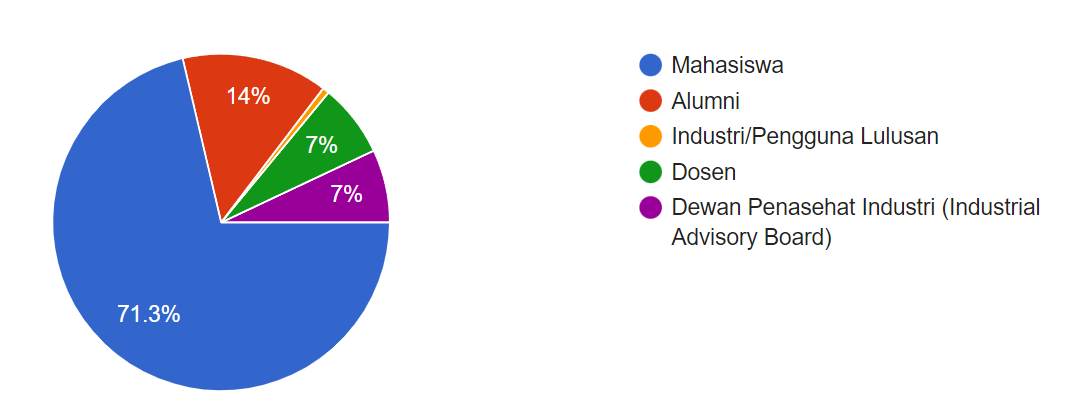
Next, in Period September to Oktober 2022 again Program Educational Objectives/PPM were reviewed by internal & external stakeholders (71.3% students, 7% faculty, 14.6% alumni & employers and 7% IAB members). Also in 2022, IAB members meeting was held in online to suggest opinion and input about PEO and curriculum.
After reviewing in 2022, current Program Educational Objectives (Profil Profesional Mandiri) of Industrial Engineering Program, Andalas University are; two-three years after graduation the graduates are expected to attain these below in their earlier career. (Tujuan Pendidikan Program/ Profil Profesional Mandiri Program Studi S1 Teknik Industri, Universitas Andalas adalah; dua-tiga tahun setelah menyelesaikan studi (lulus), lulusan diharapkan memiliki hal-hal berikut dalam awal kariernya.)
1. Graduates are expected to attain professionalism and leadership role within industrial organization or other related organization (PEO/PPM-1)
(Lulusan diharapkan memiliki profesionalisme dan peran kepemimpinan dalam organisasi industri atau organisasi lainnya yang relevan.)
2. Graduates are expected to attain role as the source for efficient and value added solutions to increase the benefit of the organization (PEO/PPM-2)
(Lulusan diharapkan memiliki peran sebagai sumber solusi yang efisien dan bernilai tambah untuk meningkatkan manfaat organisasi)
3. Graduates are expected to have applied integrated system improvement techniques to achieve global competitive advantages (PEO/PPM-3)
(Lulusan diharapkan telah menerapkan teknik-teknik perbaikan sistem terintegrasi untuk meraih keunggulan bersaing secara global)
Matriks keterkaitan Tujuan Pendidikan Program/Program Educational Objectives(PEO)/PPM dengan Misi Universitas (MU)
|
MU PEO/PPM |
MU-1 | MU-2 | MU-3 | MU-4 |
| PEO/PPM-1 | √ | √ | √ | |
| PEO/PPM-2 | √ | √ | √ | |
| PEO/PPM-3 | √ | √ |
The carier paths of the graduates of Industrial Engineering program in industrial organization and other related organization may be as; consultants, contractors, lecturers, researchers, policy and decision makers and managers or staff.(Jalur karier lulusan Program Studi S1 Teknik Industri dalam organisasi industri dan organisasi lain yang relevan dimungkinkan sebagai; Konsultan, Kontraktor, Dosen, Peneliti, Pembuat dan Pengambil Kebijakan, Pelaksana Kebijakan)
Hasil sosialisasi Program Educational Objectives (Profil Profesional Mandiri) ini memberikan pengaruh terhadap mutu pembelajaran yaitu dengan adanya profil profesional mandiri ini, seluruh stakeholders memberikan masukan terhadap peningkatan mutu pembelajaran termasuk mahasiswa melalui kuesioner. Masukan tersebut kemudian diimplementasikan dalam bentuk tindakan perbaikan dalam proses pembelajaran berdasarkan hasil asesmen atau pengukuran capaian pembelajaran program studi.
Catatan:
Daftar Misi Universitas Andalas
MU-1 Menyelenggarakan pendidikan yang berkualitas dan berkarakter untuk menghasilkan lulusan yang berdaya saing global dan berjiwa kewirausahaan;
MU-2 Menyelenggarakan penelitian dan pengembangan ilmu pengetahuan, teknologi, seni, dan humaniora yang bereputasi internasional;
MU-3 Menyelenggarakan pengabdian kepada masyarakat yang inovatif, sesuai dengan perkembangan ilmu pengetahuan dan teknologi untuk mendukung pembangunan nasional; dan
MU-4 Mengembangkan dan menerapkan tata kelola yang baik dan mampu beradaptasi dan bersinergi dengan lingkungan secara berkelanjutan
Hasil Review Tujuan Pendidikan Program/Program Educational Objectives (PEO)/ Profil Profesional Mandiri (PPM) Tahun 2022 oleh Stakeholders:
PEO/PPM-1 Lulusan diharapkan memiliki profesionalisme dan peran kepemimpinan dalam organisasi industri atau organisasi lainnya yang relevan
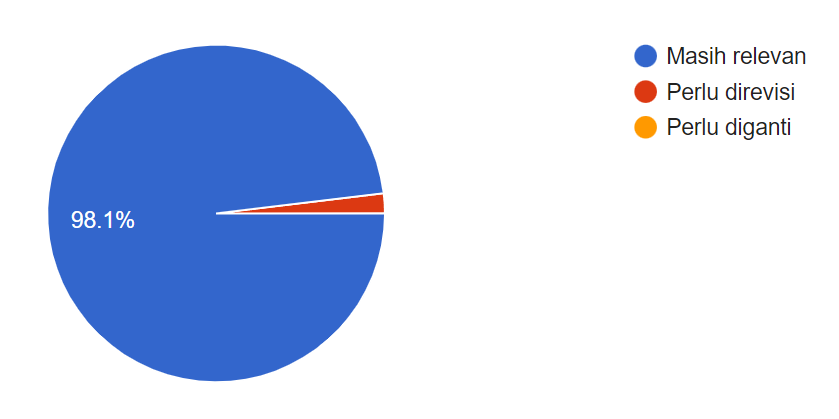
PEO/PPM-2 Lulusan diharapkan memiliki peran sebagai sumber solusi yang efisien dan bernilai tambah untuk meningkatkan manfaat organisasi
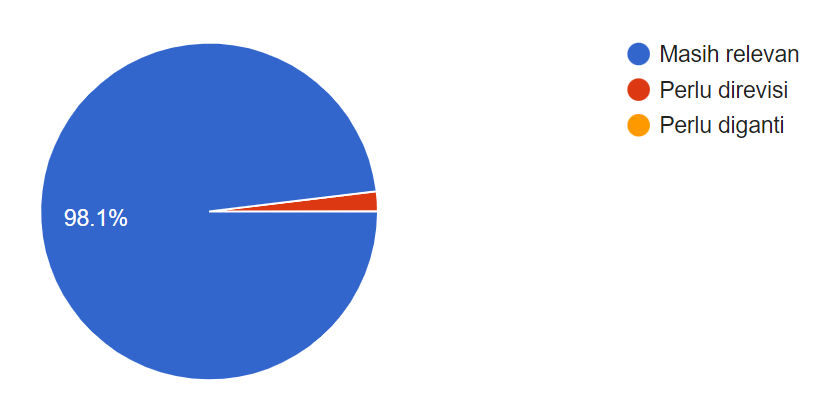
PEO/PPM-3 Lulusan diharapkan telah menerapkan teknik-teknik perbaikan sistem terintegrasi untuk meraih keunggulan bersaing secara global
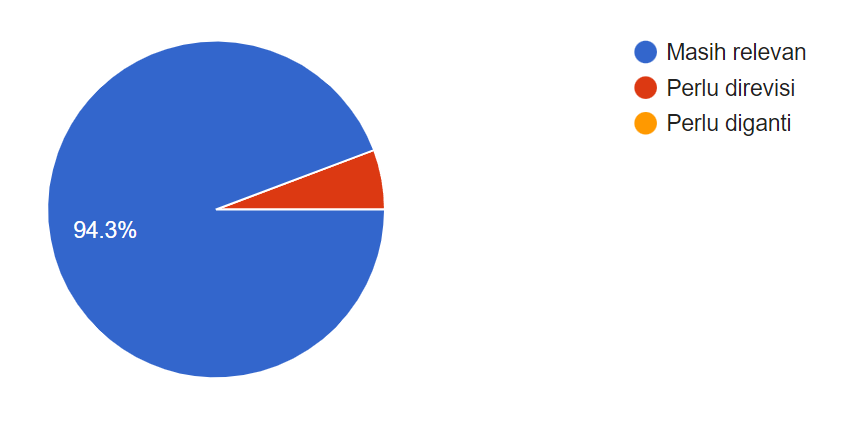
Persentase keterlibatan stakeholders
TTD
Admin Web JTI
2018 Program Educational Objectives (PEO) of Industrial Engineering Bachelor Program.
2020 Program Educational Objectives (PEO) of Industrial Engineering Bachelor Program


Prodi Teknik Industri Universitas Adzkia - Website: https://ti.adzkia.ac.id/